
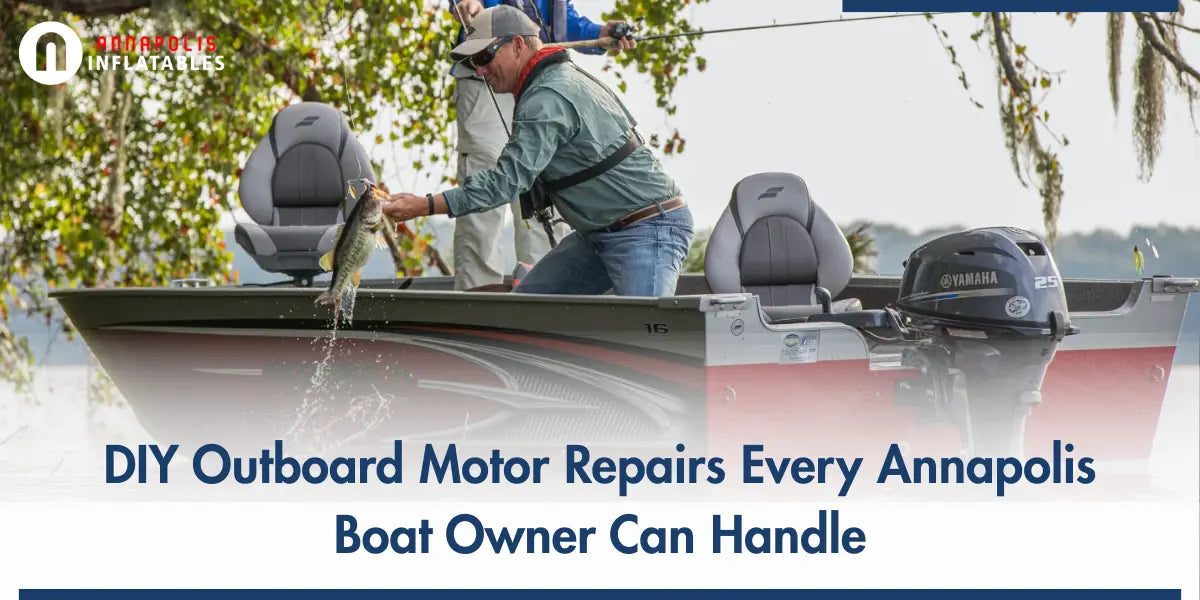
DIY Outboard Motor Repairs Every Inflatable Boat Owner Can Handle
Table of Contents
-
Common Outboard Motor Repairs You Can Fix Yourself
- Outboard Motor Not Starting
- Outboard Idles Rough or Stalls
- Diagnosing Power Loss in Your Outboard
- Understanding Outboard Overheating
- Troubleshooting Excessive Exhaust Smoke
- Fixing Propeller and Lower-Unit Problems
- When Your Outboard Won’t Shift, or the Trim/Tilt Fails
- Routine Maintenance Repairs Every Outboard Needs to Prevent Costly Failures
- The Repair Seems Beyond Your Expertise?
- FAQs
Outboard motors are reliable engines, but their constant exposure to water, salt, heat, and fuel contaminants means issues are bound to come up. The good news is that most failures fall into predictable categories, and many can be repaired with basic tools and a clear troubleshooting process.
Below is a detailed breakdown of the most common outboard motor repairs and practical steps to fixing each one.
Common Outboard Motor Repairs That You Can DIY
1. Outboard Motor Not Starting Despite Multiple Attempts
Why Outboard Motors Fail to StartMost no-start issues come down to fuel, spark, or power. Mostly it's the case of:
- Old or contaminated fuel
- Clogged fuel filter
- Air leaks in the fuel line
- Bad spark plugs
- Dead or weak battery
- Faulty kill-switch or loose ignition wiring
Steps to Repairing Outboard Motors to Restore Ignition and Fuel Flow

Step 1: Check the kill switch, throttle, and bulb
- Ensure the kill-switch lanyard is attached properly
- Move the throttle to neutral
- Prime the bulb until firm
Step 2: Inspect the fuel
- Open the tank and smell the fuel.
- If the fuel smells stale, drain the tank and refill with fresh gasoline
- Replace the inline fuel filter
Step 3: Check the fuel line
- Squeeze the primer bulb. If soft or collapsing, the fuel line may be blocked or sucking air
- Inspect for cracks, swelling, or loose clamps
- Replace the fuel hose if needed
To improve fuel flow and prevent recurring blockages, we suggest you try upgrading to a Racor 10 Micron Spin-On Fuel Filter for more reliable filtration and smoother engine performance.
Step 4: Test for spark
- Remove a spark plug
- Connect the ignition lead
- Ground the plug to metal and pull-start / turn the key
- Blue spark = good
- No spark = replace plug
- If still no spark, inspect the ignition coil and wiring
Step 5: Inspect the battery (for electric-start engines)
- Check the voltage. If it's below 12.4V, it is weak
- Tighten battery terminals
- Clean corrosion
- Charge or replace the battery
This sequence resolves most no-start issues without needing a mechanic.
2. Outboard Idles Rough or Stalls
What Leads to Unstable Idle or Sudden Stalling
- Dirty carburetor
- Clogged jets or injectors
- Blocked fuel lines
- Air leaks in the intake system
- Worn spark plugs
Detailed Repair Process to Clean, Adjust, and Restore Smooth Engine Idle

Step 1: Inspect and clean spark plugs
- Remove plugs
- Look for carbon, oil, or corrosion
- Clean with a wire brush OR replace
- Set the correct gap
Step 2: Clean the carburetor (2-stroke & some 4-stroke)
- Remove carburetor bowl
- Spray carb cleaner through the jets
- Use a thin wire to clear blocked jets (do not enlarge holes)
- Replace the gasket if it is brittle
- Reassemble and test
Step 3: Service fuel injectors (4-stroke EFI motors)
- Add injector cleaner to the fuel
- If still rough, remove injectors and clean using an ultrasonic cleaner
Step 4: Check for air leaks
- Spray soapy water around the carb/intake gaskets
- If bubbles appear = air leak
- Replace the gasket
Step 5: Inspect fuel system
- Replace clogged filters
- Check for water in the fuel (milky or cloudy)
- Drain and refill if needed
3. Diagnosing Power Loss in Your Outboard
Common Causes of Sluggish Acceleration or Reduced Power Output
- Weak spark
- Fuel restriction
- Damaged propeller
- Gearbox issues
- Marine growth on hull (for larger setups)
Detailed Step-by-Step Fixes to Improve Fuel Delivery, Ignition, and Propeller Performance

Step 1: Diagnose fuel delivery
- Squeeze the primer bulb while at idle
- If the engine improves, the fuel pump may be weak
- Replace the inline filter
- Check the pick-up tube in the tank for blockages
Step 2: Inspect spark plugs & ignition
- Replace worn plugs
- Check plug wires for cracks
- Test the ignition coil with a multimeter
Step 3: Check the propeller
Remove the prop and inspect for:
- Bent blades
- Chipped edges
- Fishing line wrapped around the shaft
If damaged, replace the prop; even small bends cause major power loss.
For full propeller selection guidance see our guide to choosing the right propeller for your outboard.
Step 4: Inspect lower-unit oil
- Drain oil if it is milky, which indicates that there is water intrusion
- If metal shavings appear: gears are wearing
- Replace seals and refill with fresh gear oil
For reliable lubrication and long-term gear protection, always use your engine manufacturer's recommended Outboard Motor Lower Unit Gear Case Oil when refilling the gearbox after service.
4. Understanding Outboard Overheating
Typical Reasons Your Cooling System Fails
- Bad or worn impeller
- Blocked water intake
- Clogged cooling passages
- Faulty thermostat
Repairing Outboard Motors for Restoring Water Flow, Replacing the Impeller, and Servicing the Thermostat

Step 1: Check water flow
- Start engine
- Look for a strong “tell-tale” water stream
- Weak or no stream = water blockage
Step 2: Clean intakes
- Remove weeds, sand, or shells
- Use a small brush or compressed air
Step 3: Replace the impeller
- Remove the lower unit
- Open water pump housing
- Replace the impeller and rubber grommets
- Grease the shaft and reassemble
A dependable choice for routine impeller maintenance is the ITT JABSCO/RULE/XYLEM Impeller, built with 6 neoprene blades and a brass insert.
Step 4: Flush the engine
- Use ear muffs or a flush port
- Run fresh water for 10–15 minutes
Step 5: Test the thermostat
- Remove thermostat
- Place in hot water
- If it doesn’t open = replace
5. Troubleshooting Excessive Exhaust Smoke
Causes of Heavy Smoke in Two-Stroke and Four-Stroke Engines
- Wrong fuel-oil mixture
- Dirty carburetor
- Worn piston rings
- Restricted air intake
A Detailed Guide to Correcting Oil Mixture, Cleaning Carburetors, and Checking Compression

Step 1: Verify oil mixture
- For 2-strokes: confirm ratio (often 50:1 or as per manufacturer)
- Drain and refill if incorrect
Step 2: Clean carburetor
- Remove the float bowl
- Clean jets and passages with carb cleaner
Step 3: Inspect air intake
- Check filter
- Clean or replace as needed
Step 4: Check compression (if smoke persists)
- Low compression indicates worn rings
- If compression is low, the engine may need a top-end rebuild
6. Fixing Propeller and Lower-Unit Problems
Common Issues That Affect Propellers and Gearcases
- Striking submerged objects
- Fishing line tangling around shaft
- Worn seals
- Low or contaminated gear oil
Detailed Repair Steps for Props, Seals, Gear Oil, and Lower-Unit Components

Step 1: Remove and inspect prop
- Look for bent or damaged blades
- Clean debris
- Grease the prop shaft before reinstalling
Step 2: Inspect lower-unit oil
- Milky oil = water leak
- Burnt smell = overheating
- Metal flakes = gear wear
Step 3: Replace prop-shaft seals
- Remove prop
- Remove the old seal with a seal puller
- Tap in the new seal carefully
- Refill gear oil
A solid pick for long-term gear protection is to use the manufacturer recommended Outboard Motor Lower Unit Gear Case Oil, designed to reduce wear and maintain consistent performance.
7. When Your Outboard Won’t Shift, or the Trim/Tilt Fails
Why Shifting Problems and Trim/Tilt Failures Occur
- Corroded cables
- Low hydraulic fluid
- Damaged linkages
- Internal wear
Detailed Repairs for Cables, Linkages, Hydraulics, and Internal Components

Step 1: Check shift cables
- Disconnect cable
- Move it by hand. If it is stiff, replace the cable.
- Lubricate ends
Step 2: Inspect linkage
- Ensure nothing is bent or corroded
- Tighten loose nuts
Step 3: For trim/tilt systems
- Check the hydraulic fluid level
- Look for leaks around the rams
- Refill with marine hydraulic fluid
A dependable choice for routine steering system maintenance is the Seastar Steering Hydraulic Steer Fluid, formulated to ensure smooth and responsive hydraulic steering.
If still stuck, the trim motor may need replacement.
8. Routine Maintenance Repairs Every Outboard Needs to Prevent Costly Failures
How Neglected Maintenance Leads to Breakdown
Skipping maintenance leads to clogs, corrosion, and premature part failure.
What You Should Be Doing
- Flush the engine after every use
- Replace spark plugs every season
- Replace the impeller every 1–2 seasons
- Change gear oil every 100 hours
- Replace fuel filters twice a year
- Add fuel stabilizer if storing fuel
These small steps prevent 80–90 percent of common outboard issues.
For a deeper look at how each of these tasks directly affects fuel efficiency on an inflatable, see our outboard maintenance tips to improve fuel efficiency.
The Repair Seems Beyond Your Expertise?
Outboard motor repairs range from simple fixes to highly technical procedures that demand specialized tools, training, and experience. While DIY maintenance can solve many minor issues, problems involving electrical systems, gearcases, water pumps, carburetor assemblies, or full engine diagnostics often require a professional hand. That’s where Annapolis Inflatable Boats becomes the most reliable choice for repairing outboard motors.
With 75+ years of combined expertise, their veteran-level technicians handle everything from routine tune-ups to complex engine overhauls that go far beyond typical at-home repair. For boat owners who want long-term reliability, safer performance, and repair work done right the first time, Annapolis Inflatable Boats remains the trusted service center, serving inflatable boat owners across the Chesapeake Bay region.
FAQs on Boat Fuel System Winterization and Storage
What types of outboard motor repairs should not be attempted at home?
Repairs involving lower-unit rebuilding,
electrical diagnostics, water pump replacements, fuel system calibration, and
overheating caused by internal blockage are best left to professionals. These
tasks require precision tools and advanced experience to ensure the engine is
fully restored without causing additional damage.
How do I know when my outboard motor needsprofessional servicing instead of a DIY fix?
If the engine continues to stall,
overheat, lose power, or run inconsistently even after basic troubleshooting,
it’s a sign of deeper issues. Any grinding noise, milky gear oil, strong
vibration, or warning alarms also indicate that the engine needs immediate
professional attention.
Does Annapolis Inflatable Boats repair all majoroutboard brands?
Yes, our technicians service all leading
brands, Yamaha, Mercury, Suzuki, Tohatsu, Honda, and other popular outboards.
With decades of combined experience, they’re familiar with both modern and
older engine designs.
Why choose Annapolis Inflatable Boats foroutboard motor repairs?
Annapolis Inflatables offers over 75 years of combined expert experience, advanced diagnostic
equipment, and seasoned technicians who understand the fine details of outboard
engine behavior. Whether the issue is simple or highly complex, their team
provides accurate troubleshooting, reliable repairs, and long-term performance
you can trust.


 Powered by goodChatBot