
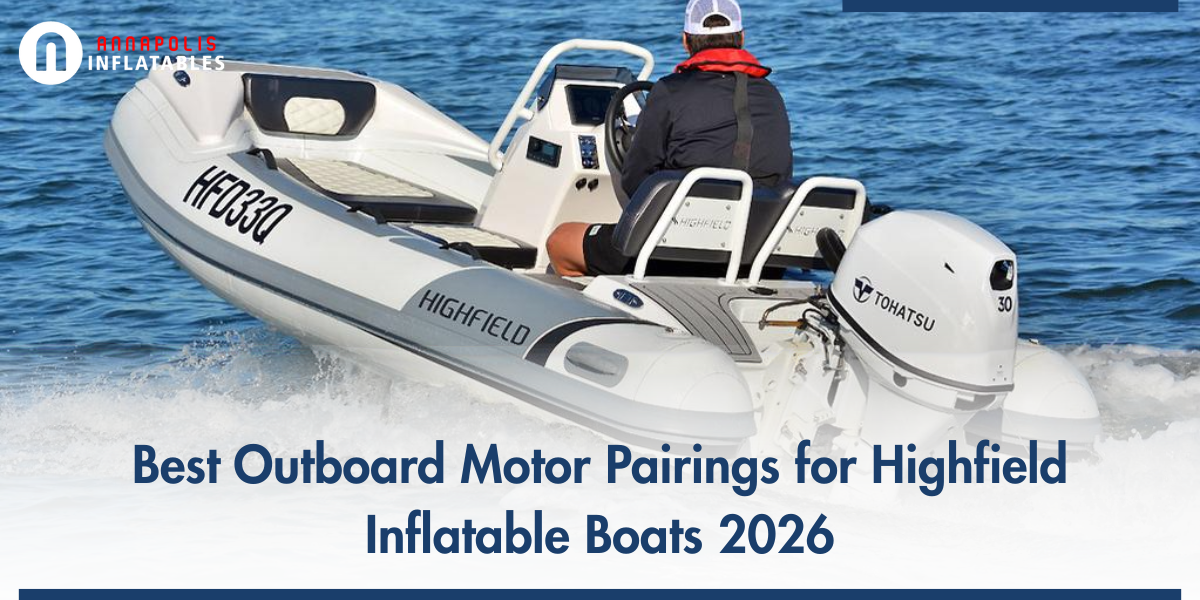
Best Outboard Motor Pairings for Highfield Inflatable Boats (2026 Guide)
Table of Contents
- Highfield Boat Families at a Glance
- Key Technical Factors When Pairing An Outboard with Highfield
- Recommended Pairings of Outboard Motors with the Highfield Inflatable Boat Series (By Use Case)
- Highfield Tender and Light-duty Classic
- Larger Classic or Small Sport
- Performance Sport RIBs
- Highfield Patrol Inflatable Boat Series
- Electric Outboards for Highfield Tenders and Short-Range Use
- Shaft Length, Transom Type, And Prop Considerations
- Gas vs Electric: When to choose which Outboard
- How Do You Handle Installation, Safety, and Maintenance Correctly?
- What Should You Review Before Deciding on an Outboard Motor?
- Final notes
- FAQs
Matching the right outboard to a Highfield inflatable affects safety, handling, fuel economy, and hull stress. Too little power leaves the boat underpowered in rough or loaded conditions. Too much power can overload the transom, increase wake, and stress structural fittings. Always consult the boat’s spec sheet before final selection.
Highfield Boat Series At A Glance
Highfield builds several main ranges that matter for motor selection:
- Ultralite: light, single-deck tenders and inflatables designed for easy trailering and low-weight engines. These are commonly paired with smaller outboards.
- Classic: double-deck tenders with aluminium hulls. Built for family use and higher load capacity.
- Sport: larger RIBs that accept more powerful outboards and are used for day boating and watersports.
- Patrol: commercial and professional RIBs with higher horsepower ranges.
Each Highfield boat family has different hull weights, transom reinforcements, and recommended maximum engine ratings. Always check the specific model placard or brochure.
Key Technical Factors When Pairing An Outboard with Highfield
Keep these five technical points in front of your mind:
- Maximum recommended horsepower and weight:heck the owner’s manual and boat plate. Don’t exceed published limits.
- Shaft (short vs long): transom height and ride preference determine shaft length. Many Highfield models offer transom options; pick the shaft that places the prop in clean water.
- Engine weight and balance:heavy engines change trim and may require different trim/tilt settings. Consider payload and where you’ll place heavy items.
- Fuel system compatibility:inboard tanks vs portable tanks, hose lengths, and bleed/vent considerations.
- Use case (tender, dayboat, fishing, tow sports): intended use drives horsepower, prop type, and gearing.
Recommended Pairings of Outboard Motors with the Highfield Inflatable Boat Series (By Use Case)
Below are practical pairings using current mainstream engine types. Each recommendation notes why it fits typical Highfield use.
A. Highfield Tender and Light-duty Classic (3.0–3.6 m / 10–12 ft)
- Best pairing: 10–20 hp 4-stroke portable outboard (short or long shaft per transom).
- Why 10-20HP Outboard for Highfield Tender:
- Lightweight and easy to store
- Good for shuttling people and light loads.
- Reliable brands: Yamaha and Tohatsu are common choices.
- For the Classic 360/340 lines, you can also check 15–25 hp.
-
Recommended Outboard Models for Highfield Tender:
dependable, widely supported - Yamsha F20
- Yamsha F25 lightweight and value-oriented
- Tohatsu 15
- Tohatsu 20
B. Larger Classic or Small Sport (3.6–4.6 m / 12–15 ft)
Typical Pairing: 20–40 HP 4-stroke outboard
would a 20–40 hp 4-stroke outboard work for Larger Classic or Small Sport boats?
- Good cruise speed with family and gear
- 30–40 HP supports heavier loads and watersports
Recommended picks for Large Highfield Classic and Sport Series:
- Yamaha F25
- Tohatsu MFS30
- Yamaha F40
C. Performance Sport RIBs (larger Sport range)
Typical Pairing: 50–150+ HP (single or twin setups)
Why 50-150+ HP motors are suitable for Highfield's larger Sports range:
Sport line hulls are performance-focused; higher horsepower unlocks planing, faster cruise, and towing. Use manufacturer limits; larger engines usually come with hydraulic trim/tilt.
Recommended Outboard for Performance Sport RIBs (by feature):
- Yamaha High-thrust V6s (smooth and durable) motors, including:
- Twin smaller outboards (two 40–90 hp) can balance weight and offer redundancy
For Example, a twin setup with two 90 HP Yamaha motors could give enough total power (≈ 180 HP) while splitting weight and giving redundancy.
D. Highfield Patrol Inflatable Boat Series
- Typical pairing: High-torque outboards sized to rated capacity; consider twin installations for redundancy. Check the commercial spec sheets and local regs.
- Why are high-torque outboards suitable for Patrol Inflatable Boats?
- Highfield Patrol boats carry heavy loads and are used in demanding, often commercial conditions.
- They need high-torque engines to push weight safely and maintain control in rough water.
- Twin engines are suggested because Patrol boats are often used for work where redundancy and reliability matter.
- And pairing engines to the rated capacity ensures safe performance and compliance with regulations.
- Recommended Outboard for Highfield Patrol Series inflatables
- Yamaha High-Thrust / Mid-range 50 HP
- Yamaha Mid-range 60 HP
- Tohatsu MFS90 (90 HP, 4-stroke)
- Tohatsu MFS75 (75 HP) or MFS60 / MFS50
Electric Outboards for Highfield Tenders And Short-Range Use
Typical pairing: Electric outboards for tenders and short-range ferries: Torqeedo, ePropulsion. Best for short runs, low noise, and low maintenance. Battery capacity and range are the limiting factors; verify range under load and install a suitable battery locker. Electric drivetrains are increasingly offered as factory options for Highfield tenders.

Shaft Length, Transom Type, And Prop Considerations
- Short vs long shaft: Measure from the top of the transom to the cavitation plate. Highfield listings show both long- and short-shaft transom options. Select the shaft so the prop runs in clean water, not ventilating or too deep.
- Transom reinforcement: Heavier engines may require reinforced transom brackets; check Highfield specs and dealer fitment options.
- Prop choice: Three-blade stainless is common for general use. For heavy loads, consider higher-pitch props; for quick plane and acceleration, pick lower pitch. Consult a prop specialist and your dealer for fine-tuning.
For detailed propeller selection, pitch, diameter, blade count, and RPM matching for inflatables, see our complete propeller selection guide.
Gas vs Electric: When to choose which Outboard
Gas outboards remain the versatile choice for range, horsepower, and fast refueling. They suit longer day trips, watersports, and commercial work.
Electric outboards are best when quiet operation, low maintenance, and near-zero local emissions matter; typical use is short runs or tender duty. Rapid battery advances in 2025–26 make electrics far more practical for marina/tender use, but range and recharge infrastructure still limit offshore or long-distance dayboating. Consider electric for dockside tenders and short commuter runs.
How Do You Handle Installation, Safety, and Maintenance Correctly?
- Confirm the boat’s maximum horsepower rating (boat plate/owner’s manual).
- Match the shaft length to the transom height and select the correct engine mounting hardware.
- Install appropriate kill switch, linkage/cables, fuel lines, and venting; use a qualified mechanic for installation.
- For petrol engines: run-in procedures, flushing (saltwater), and seasonal maintenanceas manufacturers recommend. For electrics: verify battery management and cooling.
- Perform a sea trial with a realistic load to confirm trim, handling, and top speed.
For outboard maintenance tips specific to inflatables, including portable fuel tank care and tube pressure, see our fuel efficiency maintenance guide.
What Should You Review Before Deciding On An Outboard Motor?
- Boat model and length: which Highfield family and exact model? (e.g., Classic 360)
- Intended use: tender, family dayboat, towing, commercial, or electric-only tender?
- Max rated HP and transom type: check owner manual/boat plate.
- Local dealer & service network for the chosen engine brand.
- Budget for purchase, fuel, and maintenance.
Final notes
Choosing the correct outboard for a Highfield inflatable boat is not only about horsepower. The right pairing ensures safe handling, efficient fuel use, and proper hull performance across all conditions. Every Highfield series, from lightweight Ultralite tenders to commercial-grade Patrol RIBs, comes with different load capacities, transom configurations, and recommended horsepower limits. Matching the engine to those specifications keeps the boat responsive, balanced, and structurally protected
Always begin with the boat’s rating plate and owner’s manual, then narrow choices based on intended use, expected payload, shaft length, and fuel or electrical requirements. Yamaha and Tohatsu engines remain reliable matches for Highfield’s 2026 lineup, and electric options continue expanding for tender and marina-range boating.
A well-matched motor doesn’t just improve performance, it extends equipment life, enhances safety, and ensures you get the best capability from your Highfield inflatable.
Selecting the correct motor pairing ensures your Highfield runs safely, efficiently, and the way it was designed to perform. If you’re comparing Yamaha or Tohatsu options, planning a twin-engine setup, or simply want expert guidance based on your exact Highfield model, our team can help.
Visit AnnapolisInflatables.net or get in touch with our specialists for personalized motor recommendations, rigging support, and dealer-approved engine installations.We’ll help you match the right power, weight, and features so your Highfield is fully optimized for the water.
FAQs
What size outboard motor is best for a Highfield inflatable boat?
The ideal size depends on the specific Highfield model and its rated maximum horsepower. Smaller boats like Ultralite and Classic 310–360 models work well with 10–25 hp, while larger Sport and Patrol series may require 50–150+ hp. Always match the engine to the boat’s rating plate.
Can I run twin outboards on a Highfield RIB?
Yes. Larger Sport and Patrol models can support twin-engine installations. Twin setups improve redundancy, weight distribution, and handling, especially valuable in commercial, rescue, or offshore conditions.
Should I choose electric or gas for a Highfield tender?
Electric motors are excellent for short-range marina use, low noise, and minimal maintenance, ideal for tenders. Gas outboards remain the better choice for longer distances, higher speeds, and carrying heavier loads. Your range requirement should decide the powertrain.
How do I know if my shaft length is correct?
Measure the transom height and choose a shaft length that keeps the propeller fully submerged in clean water. Highfield provides both short- and long-shaft options in its specifications. If the prop ventilates or sits too deep, performance will suffer.


 Powered by goodChatBot