
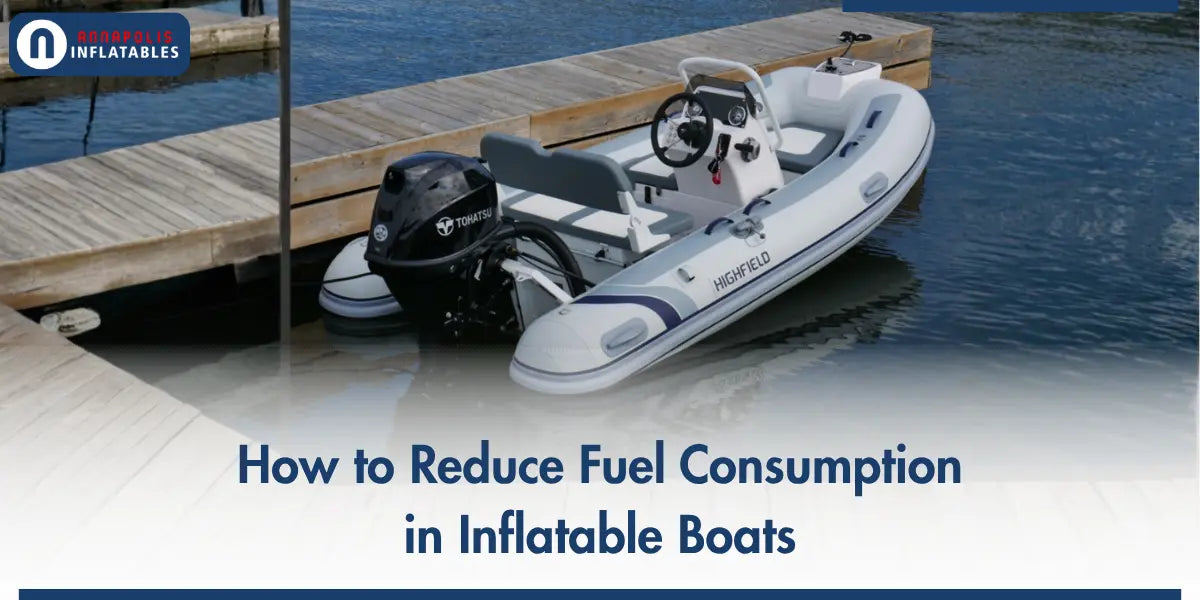
How to Reduce Fuel Consumption in Inflatable Boats
Table of Contents
- Understanding What Affects Fuel Consumption in Inflatable Boats
- Typical Fuel Consumption of Inflatable Boats
- Optimizing Boat Setup for Better Fuel Efficiency
- Operating Your Inflatable Boat Efficiently
- Reducing Drag and Water Resistance
- Environmental Factors That Influence Fuel Consumption
- Maintain Your Outboard Motor for Maximum Efficiency
- Tools That Help Monitor and Improve Fuel Efficiency
- Improve Fuel Efficiency and Extend Your Boating Range
Fuel consumption is one of the highest operating costs for inflatable boat owners. While rigid inflatable boats (RIBs) and inflatable boats are generally more efficient than larger fiberglass vessels, fuel usage can still rise quickly depending on how the boat is configured and operated.
Several factors, like cruising speed, engine setup, and propeller selection, among others, influence how much fuel your engine burns during a trip. The good news is that most of these variables are within a boat owner’s control. By understanding how inflatable boats consume fuel and making small operational adjustments, it is possible to significantly improve fuel economy without sacrificing performance.
This guide covers how you operate the boat to save fuel. For the mechanical maintenance decisions that affect efficiency before you leave the dock, see our companion guide on outboard maintenance tips to improve fuel efficiency.
Understanding What Affects Fuel Consumption in Inflatable Boats
Fuel efficiency in inflatable boats results from the interaction between the boat’s configuration, operating habits, and environmental conditions. Several variables play a key role, including:
- Engine Size and Efficiency: Larger engines naturally consume more fuel, particularly when operated at high throttle levels. However, an engine that is too small for the boat may also run inefficiently because it must work harder to maintain speed.
- Cruising Speed and Throttle Usage: Most outboard engines burn fuel most efficiently at mid-range RPM.
- Boat Weight and Load Distribution: Excess weight forces the engine to work harder, and increases drag in the water.
- Hull Resistance and Water Drag: Marine growth, debris, or poorly maintained hull surfaces increase resistance and reduce performance.
- Propeller Configuration: The diameter and pitch of the propeller determine how efficiently engine power is converted into thrust.
- Environmental Conditions: Wind, waves, and current can increase engine workload and cause significant variations in fuel usage.
Typical Fuel Consumption of Inflatable Boats
Fuel usage varies widely depending on engine size and operating conditions. A common rule used in boating is that gasoline outboard engines burn roughly 10 percent of their horsepower in gallons per hour at wide open throttle.
For example:
- A 30 HP engine may burn roughly 3 gallons per hour at maximum speed
- A 90 HP engine may burn about 9 gallons per hour at full throttle
At cruising speeds, however, fuel consumption is significantly lower
Typical Fuel Consumption Ranges For Common Inflatable Boat Engines
| Engine Size (HP) | Displacement / Low Speed (Gal/h) | Efficient Cruising / Planing (Gal/h) | Wide Open Throttle / Full Speed (Gal/h) | Notes |
|---|---|---|---|---|
| 30 HP | 0.68 – 0.90 | 1.13 – 1.36 | 1.81 – 2.27 | Best efficiency around 70–75% throttle |
| 40–50 HP | 0.90 – 1.13 | 1.36 – 1.81 | 2.27 – 2.72 | Efficient once the boat is fully on plane |
| 60 HP | 1.13 – 1.36 | 1.81 – 2.27 | 2.72 – 3.40 | Mid-size RIBs operate best at mid-range RPM |
| 80 HP | 1.36 – 1.58 | 2.27 – 2.72 | 3.40 – 4.08 | Trim and load distribution are critical |
| 90–100 HP | 1.58 – 1.81 | 2.72 – 3.17 | 4.08 – 4.99 | Larger RIBs see higher fuel burn when overloaded |
Actual fuel consumption may vary depending on factors such as hull condition, sea state, and boat loading. You can use these figures as a general benchmark when monitoring their own fuel usage.
Optimizing Boat Setup for Better Fuel Efficiency

Proper boat configuration plays a major role in fuel economy. Small adjustments to engine setup, propeller choice, and weight distribution can significantly improve performance.
Choosing the Right Engine Power
Matching the engine size to the boat’s intended use is essential. An oversized engine may provide higher speeds but often burns unnecessary fuel during normal cruising. On the other hand, an underpowered engine must operate at higher throttle levels, which also increases fuel consumption.
• Monitoring Engine Performance
Many boat owners use fuel flow meters or engine monitoring displays to track fuel consumption in real time. These tools help identify the most efficient cruising speed for a particular boat.
Selecting the Correct Propeller
The propeller is one of the most important components affecting fuel efficiency.
• Key Factors That Influence Propeller Performance
When evaluating propeller options, you need to consider the following factors:
- Engine specifications: Engine make and model determine the recommended RPM range. Maximum WOT RPM helps determine proper propeller pitch. Incorrect pitch can cause the engine to under-rev or over-rev, both of which reduce efficiency
- Propeller size (diameter × pitch): Larger diameter propellers move more water and improve thrust. Higher pitch increases theoretical speed but may reduce acceleration.
- Boat weight and load: Heavier boats often benefit from a slightly lower pitch to improve acceleration and planing ability. An incorrect propeller setup can cause the engine to work harder than necessary.
Matching the propeller to the boat’s load and engine characteristics is one of the most effective ways to improve efficiency.
Beyond propeller setup, overall boat weight and how equipment is distributed onboard also play a major role in fuel efficiency.
Managing Boat Weight and Load Distribution
Weight has a direct impact on fuel consumption.
• Best Practices for Load Management
- Carry only essential gear
- Store heavy items near the center of the boat
- Distribute passengers evenly
Even moderate increases in boat weight can raise fuel consumption by 10 to 20 percent, especially in smaller inflatable boats.
Hull Design and Boat Size Considerations
Hull design also affects efficiency. Deep-V hulls provide smoother rides in rough water but may generate more drag at lower speeds. Flatter hull designs plane more easily but may handle rough seas less comfortably. In most cases, operating habits and boat setup have a greater impact on fuel efficiency than hull shape alone.
Operating Your Inflatable Boat Efficiently
Beyond boat configuration, the way a boat is operated has a major influence on fuel consumption.
Finding the Most Fuel-Efficient Cruising Speed
Most outboard engines achieve their best efficiency at mid-range RPM levels, typically between 3500 and 4500 RPM, depending on the engine.
At these speeds, the boat remains on plane while avoiding the sharp increase in fuel burn that occurs at higher throttle levels.
• Example Fuel Burn Curve
| Engine Speed | Typical Fuel Consumption |
|---|---|
| 3000 RPM | Moderate fuel burn |
| 4000 RPM | Optimal efficiency for many boats |
| 5000+ RPM | Rapid increase in fuel usage |
Identifying the engine’s “sweet spot” can dramatically improve fuel economy.
Using Engine Trim Correctly
Engine trim influences how the boat rides on the water. When the engine is trimmed correctly:
- The hull rides higher in the water
- Drag is reduced
- Less throttle is required to maintain speed
- Small trim adjustments while underway can often reduce fuel consumption noticeably.
Avoiding Aggressive Throttle Changes
Rapid acceleration and constant speed changes waste fuel. Smooth throttle inputs allow the boat to reach planing speed more efficiently and maintain a stable engine load.
Understanding RPM and Fuel Consumption
Fuel consumption rises sharply as engine RPM increases. Maintaining steady mid-range RPM levels usually provides the best balance between speed and fuel efficiency
Reducing Drag and Water Resistance
Reducing resistance in the water is one of the easiest ways to improve fuel economy.
Keeping the Hull Clean
Marine growth, such as algae, weeds, and barnacles, increases drag and slows the boat. Regular cleaning or the use of anti-fouling coatings can help maintain smooth hull surfaces and reduce resistance.
Minimizing Unnecessary Equipment
Extra equipment increases displacement and drag. Removing unused gear not only improves fuel economy but also helps the boat reach planning speed more quickly.
Achieving Efficient Planing
Planing occurs when the boat rises and glides across the surface of the water rather than pushing through it. Boats operating on plane require less throttle to maintain speed. Several factors influence efficient planing, including:
- Weight and Balance: Uneven weight distribution can delay planing and increase drag. Heavy equipment should be placed low and closer to the center of the boat.
- Propeller and Engine Matching: Propellers that allow the engine to reach its recommended WOT RPM range typically deliver better acceleration and planing performance.
- Trim Adjustment: When accelerating, start with the engine trimmed slightly inward. As speed increases, gradually trim upward to reduce water resistance.
- Smooth Acceleration: Gradual throttle inputs help the boat transition onto plane more efficiently while maintaining stability.
Environmental Factors That Influence Fuel Consumption
External conditions also play a significant role in fuel efficiency.
Wind and Water Conditions
Headwinds, strong currents, and rough seas force the engine to work harder and increase fuel burn. Operating at slightly reduced speeds during rough conditions can improve efficiency.
Route Planning and Navigation
Planning efficient routes helps avoid unnecessary detours and engine runtime. Experienced boaters often follow the one-third fuel rule:
- One third of fuel for the outbound trip
- One third for the return trip
- One third reserved for emergencies
This practice improves safety and prevents unexpected fuel shortages.
Maintain Your Outboard Motor for Maximum Efficiency
A well-maintained engine operates closer to its designed efficiency level.
Poor maintenance can reduce engine performance and increase fuel consumption.
Key Maintenance Areas That Affect Fuel Efficiency

- Spark Plugs and Ignition System: Worn spark plugs cause incomplete combustion and wasted fuel.
- Fuel System: Clean fuel injectors and filters ensure proper fuel delivery.
- Air Intake System: Unrestricted airflow supports efficient combustion.
- Cooling System: Engines running within their normal operating temperature range (typically around 140–160°F for many outboards) burn fuel more efficiently and maintain optimal performance.
- Propeller and Lower Unit: Damaged propellers or poorly lubricated gearcases increase drag and reduce performance.
Regular servicing according to manufacturer guidelines helps maintain optimal fuel economy.
If you are looking for maintenance parts or servicing support, you can consult with our team about engine components and maintenance services for outboard motors.
Tools That Help Monitor and Improve Fuel Efficiency
Modern boating electronics make it easier than ever to track fuel usage. Common tools include:
- Fuel Flow Meters: Provide real-time fuel consumption data.
- GPS Chartplotters: Help compare speed and fuel usage across different cruising conditions.
- Engine Monitoring Displays: Show RPM, trim levels, and engine load, allowing operators to identify efficient operating ranges.
Tracking this data over time helps boat owners refine cruising habits and optimize performance.
Conclusion: Improve Fuel Efficiency and Extend Your Boating Range
Fuel consumption in inflatable boats is influenced by several interconnected factors, including engine setup, cruising speed, weight distribution, hull condition, and environmental conditions.
The most effective improvements often come from small adjustments:
- Maintaining steady cruising speeds
- Distributing weight properly
- Keeping the hull clean
- Servicing the engine regularly
- Monitoring fuel consumption during operation
These simple practices can significantly reduce fuel usage while extending cruising range and improving overall boating efficiency.
Additionally, smart operation begins with proper maintenance. When your engine is well serviced and your boat is in good condition, every adjustment you make on the water becomes more effective.
To make sure these efficiency gains hold up on the water, visit annapolisinflatables.net for expert outboard motor and maintenance services.
FAQs About How to Reduce Fuel Consumption
What cruising speed is most fuel-efficient for an inflatable boat?
Most inflatable boats achieve the best fuel efficiency at mid-range engine speeds, typically between 3500 and 4500 RPM. At this range, the boat stays on plane while avoiding the sharp increase in fuel consumption that occurs at higher throttle levels.
Does the propeller really affect how much fuel my boat uses?
Yes. The propeller determines how efficiently engine power is converted into thrust. An incorrect pitch or diameter can prevent the engine from operating within its optimal RPM range, which often leads to higher fuel consumption and reduced performance.
How much can excess weight increase fuel consumption in inflatable boats?
Even moderate increases in onboard weight can raise fuel consumption by 10–20 percent. Carrying unnecessary gear or distributing weight poorly can also delay planing, forcing the engine to work harder.
Can engine maintenance improve fuel efficiency in inflatable boats?
Yes. Clean fuel systems, properly functioning spark plugs, and an efficient cooling system help engines burn fuel more completely. Regular maintenance ensures the engine operates within its designed performance range, which helps reduce fuel consumption.


 Powered by goodChatBot