
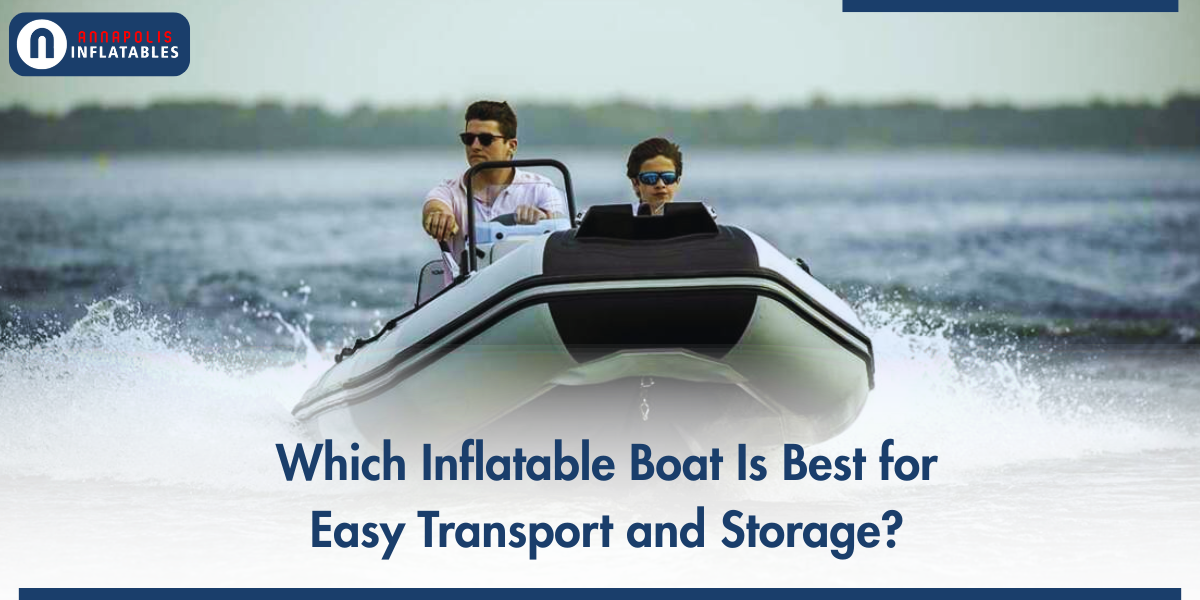
Which Inflatable Boat Is Best for Easy Transport and Storage? A Guide for First-Time Boaters
Table of Contents
- Why Transport and Storage Matter for First-Time Boaters
- What Makes an Inflatable Boat Easy to Transport and Store
- Best Inflatable Boats for Easy Transport and Storage
- How to Choose the Right Portable Inflatable Boat
- Comparison Table: Choosing the Right Type at a Glance
- Real-World Transport and Storage Scenarios
- How to Choose the Right Inflatable Boat (Step-by-Step)
- Final Thoughts
- FAQs: Choosing a Portable Inflatable Boat
Why Transport and Storage Matter for First-Time Boaters
An inflatable boat may perform well on the water, but if it is difficult to carry, takes too long to set up, or requires more storage space than you have available, it quickly becomes impractical. This is especially relevant for users without dedicated dock space or large garages.
In real-world terms, a boat that fits your vehicle, your storage setup, and your lifting capacity will always see more use than one that requires extra planning every time.
For most beginners, portability is not just a feature. It is the foundation of a good ownership experience.
What Makes an Inflatable Boat Easy to Transport and Store
Not all inflatable boats are equally easy to handle. The difference often comes down to weight, construction, and how compact the boat becomes when not in use.
Here are the factors that matter, along with practical benchmarks:
-
Weight
- Under 80 lbs: A lightweight inflatable boat is manageable for one person
- 80 to 120 lbs: may require two people
- Above 120 lbs: typically needs a trailer or launch wheels
-
Foldability vs Fixed Structure:
A fully foldable inflatable boat can be packed into a carry bag, while a foldable rigid inflatable boat or semi-rigid boats require dedicated space even when not in use
-
Packed Size:
Some boats fit into a standard car trunk, while others require roof racks, trailers, or dock storage
-
Setup Time:
Basic inflatable boats can be ready in 10 to 15 minutes, while rigid or multi-component boats may take longer
-
Transport Method Compatibility:
Whether you plan to carry it in a car, tow it, or mount it on a yacht directly impacts what type of boat is practical
Understanding these factors makes it easier to evaluate not just the boat, but how it fits into your day-to-day use.
Best Inflatable Boats for Easy Transport and Storage
The “best” inflatable boat depends on how you plan to store, transport, and use it.
Some boats are built for maximum compactness, while others focus on lightweight handling or towable convenience. Understanding these differences makes it easier to choose a model that fits your setup.
Below are the portable inflatable boat recommendations, highlighting how each type performs in real-world use.
Foldable Inflatable Boats for Maximum Portability
Foldable inflatable boats are the most space-efficient option available.
They can be deflated and packed into a compact size, making them ideal for storage in a car trunk, locker, or limited garage space. Despite their portability, modern designs still offer strong durability and performance.

The Zodiac Cadet Aero is widely regarded as a benchmark in this category due to its air deck construction, which creates a firm surface while still allowing the boat to be rolled up in a bag.

For users who want better performance without losing portability, the Forerunner folding boat 290 340 models offer a more advanced design. These fully foldable inflatable boats feature a rigid fiberglass hull that folds and removable launch wheels, allowing for easy launching and handling rougher water while still being stored compactly.
Trade-offs to consider:
- Easiest to store and transport
- Faster setup compared to rigid boats
- Rigid hull that folds into a bag
Lightweight Aluminum Boats for Easy Handling
Lightweight aluminum-hull inflatable boats offer a balance between portability and performance.
Unlike foldable boats, they do not pack into a bag, but their reduced weight makes them easier to lift, launch, and transport without heavy equipment.

The Highfield Ultralite series, including 220, 240, 260, 290, 310, and 340 models, stands out in this category due to its corrosion-resistant aluminum hull, which is lighter than fiberglass while still providing structural strength.
These lightweight inflatable boats are often used as tenders because they can be lifted onto a yacht or transported on a trailer without excessive effort.
Trade-offs of Lightweight Inflatable boats to consider:
- More rigid and durable than foldable boats
- Easier to handle than traditional rigid boats
- Requires a trailer and more storage space than fully foldable options
Compact RIBs That Balance Performance and Practicality
Rigid inflatable boats are typically less compact, but smaller models are designed to remain manageable.
A small inflatable boat is towable and provides improved stability, seating, and onboard storage. While they require more space than foldable or ultralight options, they remain manageable for users with a trailer or dedicated storage area.

The Zodiac Nomad RIB ALU series, including 2.7/3.1/3.3/3.6/3.9, shows how the lightweight construction of this 9’-13’ long small inflatable boat can improve usability without compromising performance. With aluminum hulls and integrated storage, these lightweight inflatable boats are built for practical, real-world use.

The Zodiac Open 4.2 and 4.8 models offer another compact, 13-foot and 15-foot long small inflatable boat option for users who want versatility and space without stepping into larger, more demanding setups.
Why this category of small inflatable boats is a good next step:
- More space and comfort
- Towable and manageable
- Suitable for day trips and family use
Durable Tenders for Everyday Reliability
For frequent use, durability becomes just as important as portability.
These boats are designed to handle repeated launching, docking, and general wear while still being manageable to transport and store.

The Highfield Classic series is built for this balance. It combines lightweight aluminum construction with a more robust structure, making it suitable for regular use without becoming difficult to handle.
Trade-offs to consider:
- Strong and reliable for daily use
- Slightly heavier than ultralight options
- Requires planned storage and transport setup
How to Choose the Right Portable Inflatable Boat
Each category serves a different need, so the right choice depends on how you plan to store, transport, and use your boat.
- Choose foldable boats if storage space is limited
- Choose lightweight aluminum boats if you want easier handling without folding
- Choose compact RIBs if you need more space and performance
There is no one-size-fits-all answer. Start by selecting the category that fits your setup, then compare models within that range.
Comparison Table: Choosing the Right Type at a Glance
| Boat Type | Portability | Storage Size | Setup Time | Performance | Best For |
|---|---|---|---|---|---|
| Foldable Boats (Cadet Aero, Forerunner) | Very High | Very Compact | Fast | Moderate to High | Small spaces, car transport |
| Ultralite Aluminum (Highfield Ultralite) | High | Compact | Moderate | High | Easy handling, short trips |
| Compact RIBs (Nomad, Open 4.2/4.8) | Moderate | Medium | Moderate | High | Family use, towing |
| Durable Tenders (Highfield Classic) | Moderate | Medium | Moderate | High | Frequent use |
Real-World Transport and Storage Scenarios
Choosing the right boat becomes easier when you match it to your actual setup.
Apartment or Limited Storage
- Best choice: Foldable boats like Zodiac Cadet Aero or Forerunner
- Reason: Can be easily transported, packed, and stored indoors without a dedicated space
SUV or Car Transport
- Best choice: Foldable boats or Ultralite series
- Reason: Can be carried in a trunk or lifted onto roof racks
Yacht Owners or Onboard Storage
- Best choice: Highfield Ultralite or Classic series
- Reason: Lightweight enough to lift, durable for repeated use
Trailer-Based Setup
- Best choice: Compact RIBs like Zodiac Nomad or Open series
- Reason: Easy to tow while offering better performance and comfort
Frequent Use (Fishing, Daily Trips)
- Best choice: Highfield Classic or Compact RIBs
- Reason: Built for durability and repeated handling
How to Choose the Right Inflatable Boat (Step-by-Step)
Choosing the right boat becomes easier when you break it into steps:
Step 1: Define your storage spaceCan you store a folded boat, or do you have room for a rigid structure?
Step 2: Identify your transport methodCar, trailer, or onboard storage will narrow your options quickly
Step 3: Consider weight handlingMake sure you can lift and manage the boat safely
Step 4: Match performance needsCasual use vs fishing vs offshore conditions
This approach ensures you choose a boat that fits your real-world setup, not just your preferences.
Final Thoughts
The best inflatable boat for easy transport and storage is one that fits your lifestyle and usage pattern.
For most first-time boaters, foldable boats and lightweight aluminum options offer the best balance of convenience and usability. They are easier to manage, quicker to deploy, and more practical for regular use.
As your needs evolve, you can move toward larger or more performance-focused boats. Starting with the right level of portability ensures you spend more time on the water and less time dealing with logistics.
If you are ready to choose a boat that fits your setup, explore the range of foldable dinghies, lightweight tenders, and compact RIBs available at Annapolis Inflatables. Browse the collections to compare models, understand your options, and select an inflatable boat that makes every trip to the water simple and efficient.
FAQs
What size inflatable boat is best for beginners?
For beginners, small inflatable boats between 8 to 11 feet are ideal. They are easier to handle, transport, and store, while still offering enough space for basic recreational use.
Which inflatable boat is best for small storage spaces like apartments?
Foldable inflatable boats, such as the Forerunner folding boat range or the Zodiac Cadet Aero series, are the best option for small storage spaces. They can be stored indoors, in closets, or in compact storage areas without needing a dedicated outdoor space.
Can a portable inflatable boat fit in a car trunk?
Yes, Forerunner folding boat models 290 and 340 are designed to fit in a standard car trunk once deflated. However, larger or rigid inflatable boats typically require a roof rack or trailer for transport.
What is the difference between a foldable inflatable boat and a rigid inflatable boat?
A foldable inflatable boat can be deflated and packed for compact storage, making it ideal for portability. A rigid inflatable boat (RIB) has a fixed hull, offering better performance and stability but requiring more storage space and usually a trailer for transport.


 Powered by goodChatBot