
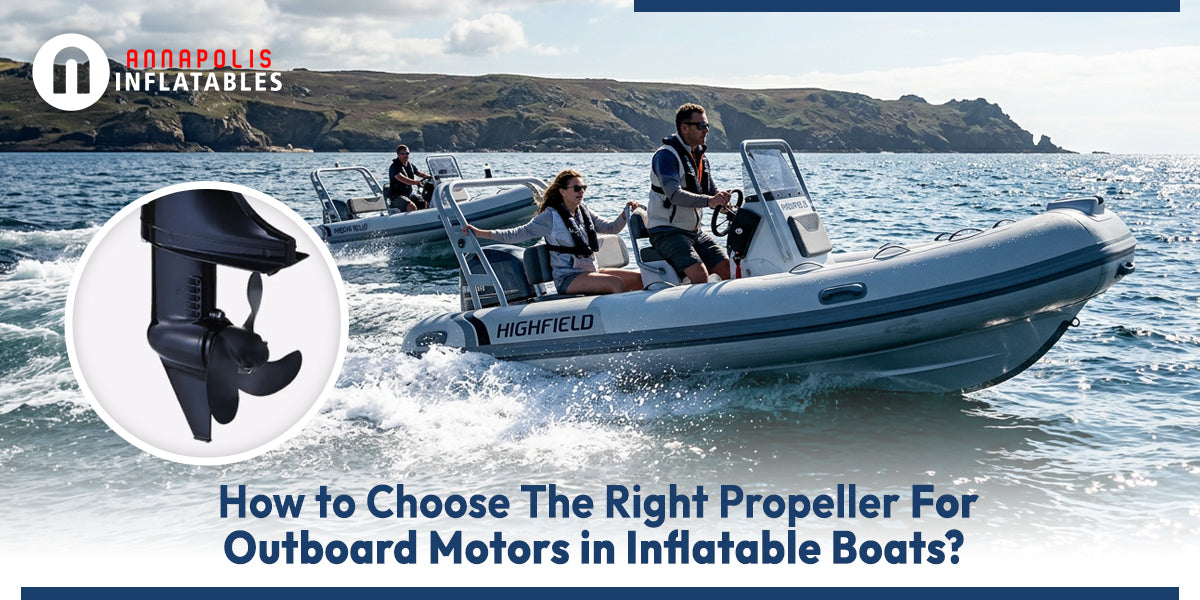
How to Choose the Right Propeller for Outboard Motors in Inflatable Boats
Table of Contents
- Why Propeller Choice Matters for Inflatable Boats
- Understanding the Basics of Boat Propellers
- Key Factors to Consider Before Choosing a Propeller
- Choose the Right Propeller Based on How You Use Your Boat
- Recommended Starting Point (If You’re Unsure)
- Match the Propeller to Your Engine Performance
- Common Propeller Selection Mistakes and How to Avoid Them
- Tips for Testing and Real-World Performance
- Quick Propeller Selection Checklist
- Conclusion: Choose Smart, Boat Better
- FAQs
Choosing the right propeller for outboard motors is one of the most important decisions you can make for your inflatable boat. The right setup improves speed, fuel efficiency, handling, and engine performance. The wrong one leads to poor acceleration, higher fuel costs, and unnecessary engine strain. .
Whether you’re upgrading or selecting your first inflatable boat motor propeller, this guide helps you move from confusion to a confident choice.
Why Propeller Choice Matters for Inflatable Boats
Inflatable boats are lightweight and highly responsive. That makes boat propellers more influential on performance compared to heavier hulls.
The right outboard propellers help you:
- Plane faster
- Maintain better control
- Improve fuel efficiency
- Reduce engine load
Expert Insight: For most inflatable boats, real-world performance depends more on acceleration and control than top speed.
Understanding the Basics of Boat Propellers

Before choosing an outboard motor propeller, you need to understand the key elements that affect performance.
1. Propeller Diameter:
Larger diameter = more water displacement = better thrust for heavier loads.2. Propeller Pitch
- Lower pitch: faster acceleration, easier planing
- Higher pitch: higher top speed, slower acceleration
For inflatable boats, pitch selection matters more because load conditions change frequently.
3. Number of Blades
- 3-blade: higher top speed and strong all-around performance (especially in lighter loads)
- 4-blade: better grip, smoother handling, improved acceleration, and stronger performance under load (with slightly lower top speed)
4. Material Options
-
Aluminum boat propeller:
Practical, affordable, and ideal for most recreational inflatable boats -
Stainless steel boat propeller:
Stronger and more durable, maintaining blade shape under load and often delivering better performance in high-demand or high-speed conditions -
Composite propellers:
Lightweight and corrosion-resistant, commonly used in smaller engines, electric setups, or budget recreational applications
5. Blade Design (Cup & Shape):
Cupped blades improve grip and reduce slippage. This is especially useful in choppy water or tight turns.
6. Ventilation and Cavitation
- Ventilation reduces thrust when air reaches the blades
- Cavitation occurs when low pressure creates vapor bubbles on the blade surface, reducing thrust, overall efficiency, and potentially damaging the propeller over time.
A properly matched outboard propeller setup minimizes both.
7. Engine RPM Compatibility (WOT Range)
Your boat motor propeller must allow the engine to reach its recommended WOT RPM range under normal operating load and trim conditions
- Too low: overloaded engine
- Too high: risk of over-revving
This is the single most important performance indicator.
Key Factors to Consider Before Choosing a Propeller
-
Engine Specifications:
Know your engine’s make, model, and WOT RPM range. Your outboard motor propeller directly controls how your engine performs under load. If the propeller prevents the engine from reaching its correct RPM range, it can either overload the engine or cause it to over-rev. Both reduce efficiency and can shorten engine life. -
Boat Size and Load:
Always base your boat propellers’ choice on your typical load, not empty conditions. Inflatable boats are highly sensitive to weight changes. A propeller that performs well with two people may struggle when the boat is fully loaded with passengers and gear. Choosing based on real usage ensures consistent acceleration, planning, and fuel efficiency.
For maintenance tasks that keep your outboard running at peak efficiency on an inflatable see our inflatable boat fuel efficiency maintenance guide
-
Gearcase Compatibility:
Ensure your outboard motor propeller matches your prop shaft and gearcase limits. Not all propellers fit every engine. Even if they fit physically, mismatched dimensions can reduce power transfer and efficiency. A compatible boat motor propeller ensures your engine’s power is delivered effectively to the water. -
Performance Goals
Be clear about what you want from your setup:- Higher top speed
- Faster acceleration
- Better load handling
Every propeller for outboard motors involves trade-offs. A setup optimized for speed will behave differently from one designed for heavy loads or quick planning. Defining your goal upfront prevents choosing a propeller that performs well in one area but underperforms where you actually need it.
Choose the Right Propeller for How You Actually Use Your Boat

Once your setup is clear, the next step is choosing a propeller that matches how you actually use your boat.
Quick Selection Guide
| Use Case | What You Need Most | Recommended Setup |
|---|---|---|
| Cruising | Fuel efficiency, smooth ride | Medium pitch outboard propellers |
| Fishing | Stability, low-speed control | 4-blade outboard motor propeller |
| Watersports | Fast acceleration, quick planing | Lower pitch propeller for outboard motors |
| Heavy Loads | Power, load handling | Lower pitch + larger diameter boat motor propeller |
What This Means in Real Use
- Cruising: Balanced setup for consistent speed and better fuel economy
- Fishing: Improved low-speed handling and reduced slip
- Watersports: Faster planing and stronger initial pull
- Heavy Loads: Better thrust and consistent performance under weight
Pro Tip:
If your usage varies, keep multiple outboard propellers to switch based on need.
Recommended Starting Point (If You’re Unsure)
If you don’t know where to begin, use this as a practical baseline:
- Small inflatables (under 10 ft): Often perform better with lower pitch for quick planing
- Mid-size inflatables (10–12 ft): Typically need a balanced pitch based on engine power and usage
- Larger inflatables (12–14 ft+): Usually require lower pitch and/or higher-thrust setups depending on load and horsepower
This won’t replace fine-tuning, but it will get you very close to the right setup.
Match the Propeller to Your Engine Performance
After installation, performance tells you if your propeller for outboard motors is correctly matched.
-
If RPM is too low, the propeller likely has too much pitch
Example: Your engine is rated for 5000–6000 RPM, but at full throttle, it only reaches 4400 RPM. The boat feels sluggish, struggles to plane, and the engine sounds strained. -
If RPM is too high, the pitch may be too low
Example: Your engine exceeds its recommended range and hits 6200+ RPM easily. The boat planes quickly but feels “loose,” with less forward push and reduced efficiency at higher speeds.
For inflatable boats, reaching the correct RPM during acceleration and planning is critical, as their lightweight design makes performance differences more noticeable.
How to Fine-Tune the Propeller
If performance feels off:
- Adjust pitch in small increments
- Try a different blade configuration
- Switch between an aluminum boat propeller and a stainless steel boat propeller
Propeller Selection and Engine Pairing Go Hand-in-Hand: Your propeller for outboard motors works best when paired correctly with your engine and boat type.
If you’re still selecting an engine, check out our guide on the best outboard motor pairings for inflatable boats to ensure your entire setup works together efficiently.
Common Mistakes and How to Spot Them
Even experienced boaters make avoidable mistakes when selecting outboard propellers. The key is not just knowing what goes wrong but recognizing the signs early.
1. Choosing the Wrong Pitch for Your Needs
Many boaters choose a higher pitch for speed but sacrifice acceleration and usability.
- What happens: Sluggish performance, difficulty planing
- What to do: Reduce pitch to improve acceleration and load handling
2. Ignoring Real-World Load Conditions
Testing with minimal weight leads to poor real-world performance.
- What happens: Boat performs well lightly loaded, but struggles with passengers or gear
- What to do: Select your boat propellers based on typical usage, not ideal conditions
3. Not Matching the Engine’s RPM Range
Your outboard motor propeller must allow the engine to operate within its recommended WOT RPM range.
- Too low RPM: Engine is overloaded, feels strained
- Too high RPM: Loss of efficiency and potential engine damage
4. Using One Propeller for Every Situation
No single boat motor propeller performs perfectly across all use cases.
- What happens: Compromised performance across activities
- What to do: Keep multiple outboard propellers if your usage varies
5. Overlooking Material and Design Differences
Material and blade design directly impact durability and performance.
- What happens: Reduced efficiency or faster wear in demanding conditions
- What to do: Choose between an aluminum boat propeller and a stainless-steel boat propeller based on your usage
Tips for Testing and Fine-Tuning Your Propeller
Even the best outboard propellers require real-world testing.
- Run a sea trial and check WOT RPM
- Test under typical load conditions
- Adjust pitch incrementally (usually by 1–2 inches)
- Keep a spare boat motor propeller for flexibility
If you're unsure, consulting a marine technician can help you fine-tune your setup.
Quick Propeller Selection Checklist
If you’re unsure where to start, use this checklist to confidently choose the right propeller for outboard motors:
- Check your engine’s recommended WOT RPM range
- Identify your typical load (people, fuel, gear)
- Define your primary use (cruising, fishing, watersports, heavy loads)
- Start with a pitch suited to your use case
- Ensure compatibility with your gearcase and prop shaft
- Test performance and adjust pitch in small increments (1–2 inches)
This process helps you narrow down the best outboard propellers without guesswork.
Conclusion: Choose Smart, Boat Better
There’s no one-size-fits-all solution when it comes to boat propellers. The right choice depends on your engine, boat size, load, and how you use your inflatable.
By understanding pitch, diameter, materials, and performance goals, you can confidently select the best outboard motor propeller for your setup.
Ready to Find the Right Propeller for Your Setup?
Not sure which propeller for outboard motors fits your boat, engine, and usage?
At Annapolis Inflatables , we help you choose based on real-world performance, not guesswork. Whether you need a durable aluminum boat propeller, a high-performance stainless steel boat propeller, or reliable Mercury boat motor propellers, our team will guide you to the right match. Explore our range of outboard propellers or reach out with your setup details, and we’ll recommend the exact inflatable boat motor propeller that delivers the performance you’re looking for.
Better performance starts with the right prop. Let’s find yours.
FAQs
How do I know if my propeller pitch is wrong?
If your boat struggles to plane, feels sluggish, or your engine cannot reach its recommended RPM range, your pitch is likely too high. If the engine revs too easily and exceeds its RPM range, the pitch may be too low. Checking WOT RPM under normal load is the most reliable way to confirm.
Should I prioritize speed or acceleration for an inflatable boat?
For most inflatable boats, acceleration and quick planning matter more than top speed. These boats are often used with varying loads, so a setup that improves responsiveness and control is usually the better choice.
Is a 4-blade propeller better than a 3-blade for inflatable boats?
It depends on your use. A 4-blade propeller offers better grip, smoother handling, and improved performance under load. A 3-blade propeller is typically better for achieving higher top speed in lighter conditions.
What is the easiest way to choose the right propeller if I’m unsure?
Start with your engine’s recommended WOT RPM range, your typical load, and your primary use. Choose a balanced or slightly lower pitch as a starting point, test performance, and adjust in small increments based on real-world results.


 Powered by goodChatBot