
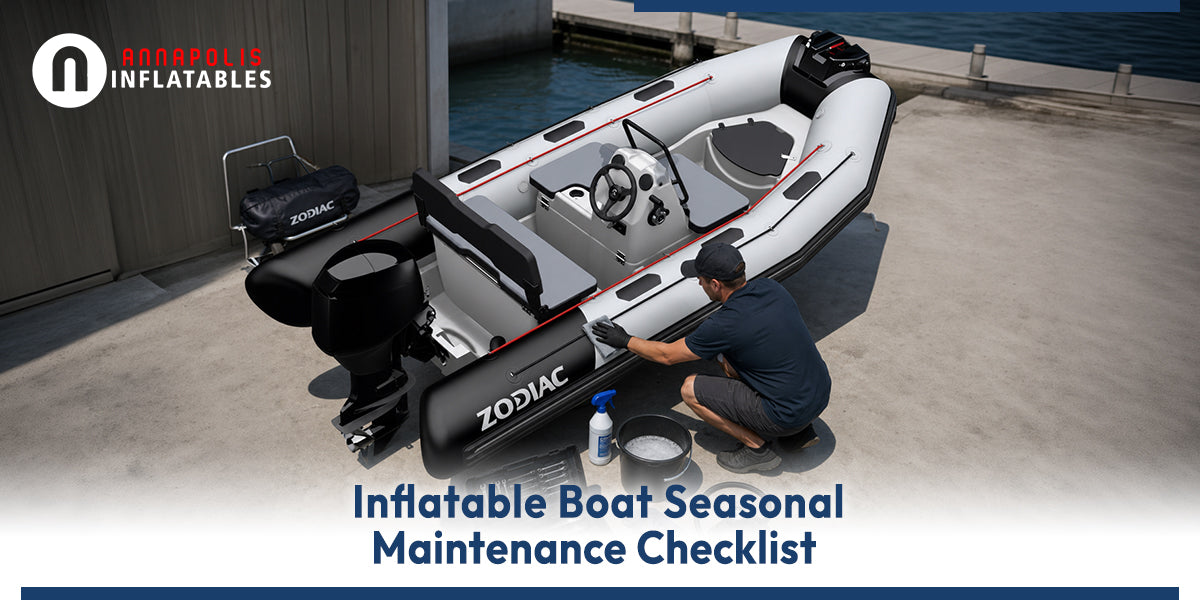
Seasonal Boat Maintenance Checklist for Inflatables and Outboards
Table of Contents
- Spring Season Maintenance for Inflatable Boats and Motors
- Outboard Motor and Inflatable Boat Maintenance for Boating Season
- Consult a Professional for Inflatable Boat Service
- Late Boating Season boat checks
- Winter Boat Maintenance: Storing The Inflatable Correctly
- Professional Boat Storage for Winter Season
- Seasonal Maintenance of Inflatable Boat and Outboard Motor at A Glance
- The Cost Of Maintaining Your Inflatable And Motor
- FAQs
Your inflatable's tubes, valves, seams, and fittings rarely get attention until something fails, by which point a ten-minute seasonal inspection has become a repair bill. This checklist covers both the boat and the motor, organized by season. It tells you what to check, when to check it, and when to call a professional.
If you boat on the Chesapeake Bay or any tidal or estuarine water, the saltwater and UV sections of this seasonal boat maintenance checklist apply directly to your conditions.
Let’s dive in.
Spring Season Maintenance for Inflatable Boats and Motors

Inflatable Boat Spring Maintenance
Tube Inspection
Inflate tubes to approximately 80% of operating pressure and leave for two hours before bringing to full pressure. This gradual inflation reveals slow leaks that a rapid inflation masks. Check the following:
- Run your hands along the full circumference of each tube, feeling for soft spots, bubbles, or areas that feel different from the surrounding fabric
- Inspect all seams, the glued joins between tube sections and between tubes and the transom, for lifting edges, discoloration, or separation
- Check valve bases, where the valve body meets the tube fabric, a common leak point on older boats
- Look for any abrasion damage, UV discoloration, or surface crazing on PVC tubes. White chalky patches indicate UV degradation of the outer coating
Hypalon tubes are more UV-resistant but still require seam inspection. If seam glue is lifting on either material, have it re-bonded by a professional before use; a seam that lifts under load mid-water is a more serious problem than one caught at the dock.
Not sure which material your tubes are? Read our guide on why Hypalon outperforms PVC for dinghies
Valve Check
Press each valve core with a fingernail to confirm it seats correctly and springs back firmly. A valve that does not reseat properly leaks slowly and is often mistaken for a tube puncture. Valve cores are inexpensive to replace and screw out with a standard valve tool. Carry spares.
Hull and Floor Inspection
For aluminum-hull RIBs, inspect the hull surface for any impact damage, deep scratches through the paint, or signs of corrosion at joints and fittings. For fiberglass hulls, check for cracks or crazing, particularly around transom fittings and motor bracket points where stress concentrates. Inspect the floor panels, slatted, aluminum, or inflatable, for any cracking, delamination, or loose fittings.
Fittings and Hardware
- Check all stainless fittings, cleats, and D-rings for corrosion or loose backing plates
- Inspect towing eyes and lifting handles, load-bearing fittings that are often overlooked
- Check navigation light connections if fitted
- Inspect the transom, any movement or flex when the motor is mounted indicates a structural issue requiring professional attention before use
Outboard Motor Spring Season Maintenance
Spring recommissioning of the outboard is covered in detail in our guide to dewinterising your RIB for spring boating. The key checks at this stage are: fuel system inspection, battery test, cooling system confirmation, and a controlled first start on flush muffs before the first outing.
Before The First Spring Launch
Do not skip the controlled first start on fluff muffs. An impeller that stiffened over winter may not circulate water immediately on the first open-water start; which can cause the engine to overheat before the tell-tale is noticed.
Outboard Motor and Inflatable Boat Maintenance for Boating Season

Monthly: During Active Season
Boat Spring maintenance is required to perform once a month during the boating season, work through the following checks. They take under 30 minutes and catch the issues that build gradually between outings.
Tube Pressure Trend Check
Inflate tubes to correct operating pressure and mark the reading time. Re-check at the same time of day after 24 hours without using the boat. A tube that loses more than 10% of its pressure under consistent temperature conditions has a slow leak worth locating now. Apply soapy water to all seams, valve bases, and any areas of surface concern. Bubbles confirm the leak point. Mark with a chinagraph pencil for repair.
Temperature significantly affects tube pressure; a reading taken in the afternoon heat will drop the following cold morning noticeably without any actual leak. Account for temperature change before concluding a leak exists.
Propeller Removal And Inspection
The pre-launch propeller check is a visual glance. The monthly check is a full removal. Take the propeller off, clean the shaft, and inspect the blades carefully for any damage that was not obvious from above, particularly on the trailing edges and blade tips where small chips concentrate stress. Inspect the prop shaft seal area for any sign of oil weeping, which indicates the seal is beginning to fail. Apply fresh marine grease to the shaft before replacing.
Anode Condition
In regular saltwater and estuarine use, the typical Chesapeake Bay operating environment, sacrificial anodes can consume faster than an annual inspection catches. Check the anode condition monthly during the active season. If the anode is more than 50% consumed, replace it before the next outing. Do not leave a fully consumed anode in place. Once the anode is gone, galvanic corrosion moves directly to the aluminum components of the lower unit.
Fuel lines and primer bulb
Portable fuel setups take more abuse than fixed installations; tanks are connected and disconnected, lines flex and UV-age, and o-rings harden with heat cycling. Once a month, squeeze the primer bulb and hold it for 10 seconds. Inspect the full line run for any surface crazing, softness, or whitish staining. Check quick-connect o-rings for flattening or cracking. Replace any component that shows deterioration; a fuel leak on an inflatable creates a fire risk that does not exist in the same way on a rigid hull.
Hull cleaning
Marine growth, algae film, light barnacle settlement, and silt accumulation begin forming on hull surfaces within two to three weeks of continuous immersion in warm Chesapeake Bay water. For boats retrieved after every outing, a monthly clean of the hull underside is sufficient. For boats left on moorings, clean every two weeks during summer. Use a soft brush and a cleaner confirmed compatible with your hull material, PVC and Hypalon require different products. Do not use abrasive pads on either material.
Fabric and seam inspection
In good light, run a full visual inspection of the tube surface. Look for new abrasion marks from dock or beach contact, UV fading progression since spring, and any lifting at seam sections that were intact last month. Seam issues caught when a small section is lifting, repairable with a thin bead of compatible adhesive, are significantly cheaper to address than seams that have separated over a full length.
Mid-season gear oil check for heavy users
For owners putting significant hours on the motor through the summer, regular fishing trips, watersports, and commercial tender use, a gear oil check at the mid-season point is worth adding to the monthly routine. Drain a small sample from the lower plug and inspect for milky discoloration, which indicates water ingress through a seal. Catching this mid-season rather than at the annual change prevents a season of running with contaminated oil, degrading the lower unit bearings.
Battery maintenance: electric-start motors
If your outboard has an electric start, check battery voltage monthly during the active season, not just at the start of spring. A battery that tests at 12.4 volts or below under no load is weak and may fail to start the motor reliably under real conditions. Clean any corrosion from terminals with a wire brush and apply dielectric grease. A battery maintainer between outings extends service life significantly on motors that sit for more than a week between uses.
Consult a Professional for Inflatable Boat Service
If a seam has lifted more than 2cm in any section, if tube deflation exceeds 10% overnight with no valve fault found, or if gear oil shows milky contamination, stop using the boat until a professional has assessed the issue. Running a compromised seam, tube, or lower unit seal accelerates the damage every outing. Contact Annapolis Inflatable Boat Maintenance and Repair Service now to save your boat from damage and seasonal boat maintenance.
Late Boating Season boat checks

Full Inflatable Tube Inspection
Repeat the spring tube inspection process with one addition: apply a soapy water solution to all seams, valve bases, and any areas that showed pressure loss during the season. Bubbles confirm the leak location. Mark any leak points with a chinagraph pencil for repair before storage.
UV Protection for Inflatable Boat
Apply a UV protectant appropriate for your tube material; PVC-specific or Hypalon-specific products are available at marine chandleries, Fawcett Boat Supplies. UV treatment before storage rather than after extends protection into early spring when the boat may sit uncovered for periods before the first outing. For boats stored outdoors, a breathable boat cover is the most effective UV protection available.
Fittings and Hardware
- Apply corrosion inhibitor to all stainless fittings, cleats, and exposed metal
- Grease all through-hull fittings and drain plug threads
- Inspect and tighten all transom motor bracket bolts; vibration loosens these over a season
- Check and top up hydraulic trim fluid, if fitted
Late-season Motor Preparation
Fuel stabilization, fogging, gear oil change, and battery care before storage are covered in full in our outboard winterization guide. Complete these steps before the boat goes into storage, not after a period of sitting. Fuel begins to degrade within 30 days of purchase.
Winter Boat Maintenance: Storing The Inflatable Correctly

Inflation level for storage
Checking the Inflation level of the tube is one of the crucial steps of winter boat maintenance. The correct storage inflation level depends on your storage environment. For indoor climate-controlled storage, deflate tubes to approximately 50%, this relieves long-term stress on seams and valve bases while keeping the tube shape intact. For outdoor storage, keep tubes at closer to full pressure to resist compression from cover weight and debris. Never store fully deflated for extended periods; folded fabric creates permanent crease marks and can crack aged PVC.
Cleaning before storage
Store the boat clean, not the other way around. Salt, silt, and biological matter left on the tube fabric over winter cause a progressive chemical attack on the outer coating. Wash the full boat with fresh water, a mild soap solution, and a soft brush. Allow to dry completely before covering or storing; trapped moisture under a cover promotes mildew on the tube fabric and inside hull compartments.
Storage position
Inflatable boats store best right-side up on a flat surface or padded cradle. Avoid storing on uneven surfaces that create pressure points on tube seams. If hanging storage is used, support the full length of the hull rather than hanging from bow and stern eyes only, the weight of an aluminum or fiberglass hull concentrated at two points stresses the fittings over months.
Cover selection
A breathable cover prevents UV damage while allowing moisture to escape. Non-breathable covers trap condensation inside, which is more damaging to tube fabric, electrical connections, and upholstery than moderate UV exposure. For boats stored outdoors through a Chesapeake Bay winter, with freeze-thaw cycles and damp conditions, a breathable cover is not optional.
Professional Boat Storage for Winter Season
Annapolis Inflatables offers secure outdoor storage with shrink wrap protection for inflatable boats and RIBs of all sizes, including pre-storage winterization and spring recommissioning services. Store your boat at Annapolis Inflatables now
Seasonal Maintenance of Inflatable Boat and Outboard Motor at A Glance
Save this checklist, work through the relevant section at the start of each season and before each major outing.

The Cost Of Maintaining Your Inflatable And Motor
A tube re-glue costs between $300 and $800, depending on seam length and material. A valve replacement is $30 and takes 10 minutes. The difference between the two outcomes is usually a monthly inspection that takes less time than the trip to the launch ramp.
Inflatable boats are more durable than their fabric construction suggests, but that durability is conditional on consistent, straightforward care. The seasonal boat maintenance checks in this guide require no special tools and no prior mechanical knowledge. They require only the habit of doing them.
For professional service, storage, and inflatable boat repairs in the Annapolis and Chesapeake Bay area, visit annapolisinflatables now!
FAQs
How do I know if my inflatable tube has a slow leak or is just losing pressure due to temperature changes?
Temperature affects tube pressure significantly, a tube inflated in the warm afternoon will read noticeably lower the following cold morning. To distinguish a temperature effect from a genuine slow leak, inflate to correct pressure and re-check at a similar time of day and temperature after 24 hours. A loss of more than 10% of pressure under consistent temperature conditions indicates a leak worth locating. A soapy water brush-over of the full tube surface, seams, valve bases, and fabric, will show bubbles at the leak point.
Can I use any UV protectant on my inflatable tubes?
No, PVC and Hypalon require different products and using an incompatible protectant can soften or stain the tube material. Check the product label for explicit compatibility with your hull material before applying. Your inflatable boat dealer or Annapolis Inflatables can recommend a compatible product if you are unsure of your tube material.
How long can I leave my inflatable in the water before hull growth becomes a problem?
In warm Chesapeake Bay water during summer, light algae film can begin forming within two to three weeks of continuous immersion. For boats left on a mooring or dock for extended periods, monthly cleaning of the hull underside is a reasonable minimum. Boats used and retrieved after each outing have significantly less exposure, a seasonal clean is usually sufficient for trailered boats.
Is it worth paying for professional storage or should I store the boat at home?
It depends on your storage conditions at home. A dry, covered garage or workshop with stable temperatures is comparable to professional storage for the boat itself. The advantage of professional storage, at a facility like Annapolis Inflatables, is the bundled winterisation, shrink wrap protection, and spring recommissioning services that ensure the boat is handled correctly through the transition rather than sitting untreated until you have time to address it. For boats without access to dry covered home storage, professional storage is worth the cost.


 Powered by goodChatBot