
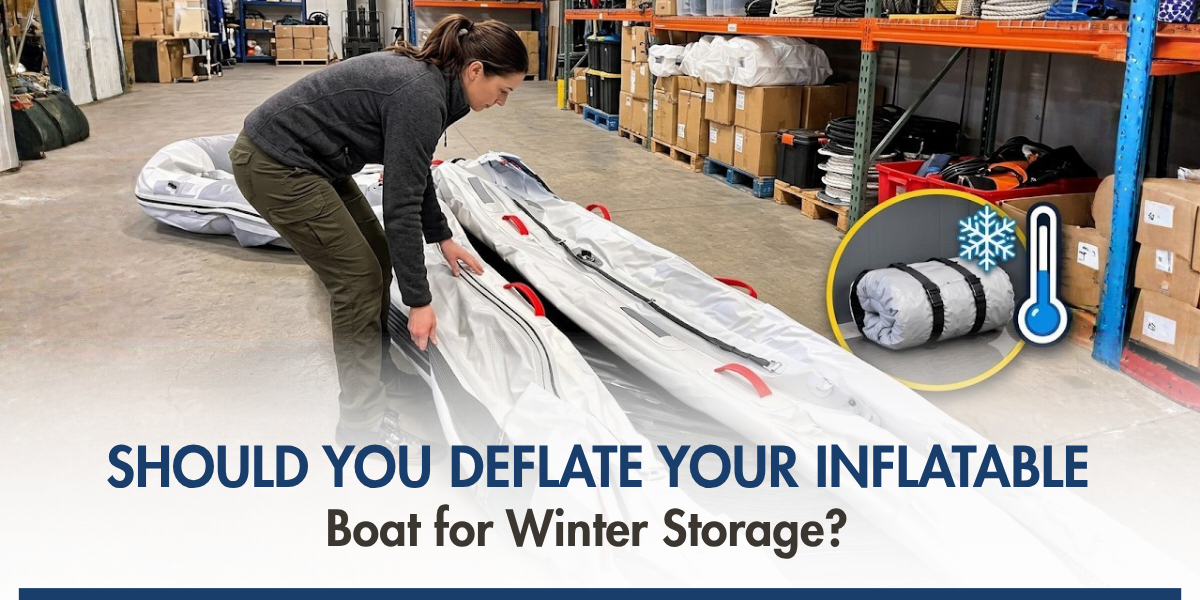
Should You Deflate Your Inflatable Boat for Winter Storage?
If you have the space, the best way to store an inflatable boat for winter is clean, completely dry, and slightly inflated. Keeping a little air in the tubes holds their shape, reduces stress on seams and folds, and leaves mice nothing to nest in. If space is tight, deflating is fine too, as long as the boat is bone dry, rolled loosely, and stored off the floor in a dry, rodent-free spot.
This guide explains how to store an inflatable boat the right way, compares inflated and deflated storage, and covers the steps that matter most for winter boat storage: cleaning, drying, leak testing, cold-weather care, mice prevention, covers, and your outboard.
Key Takeaways
- Major manufacturers such as Zodiac allow both methods: deflated and rolled up in its bag, or assembled and slightly inflated.
- If you store your boat inflated, keep it slightly under-inflated and expect pressure to drop as temperatures fall.
- If a deflated boat has been stored below 32°F, let it warm up at room temperature for 12 hours before unfolding it.
- Never cover or pack away a boat that is still damp, because trapped moisture leads to mildew.
- Highfield’s warranty excludes mold, mildew, and damage caused by improper storage, so winter prep protects your coverage as well as your tubes.
Table of Contents
- Should You Store Your Inflatable Boat Inflated or Deflated?
- How to Store an Inflatable Boat for Winter: Step by Step
- Why Cold Temperatures Matter for Inflatable Tubes
- Does Hypalon or PVC Change How You Store Your Boat?
- How Do You Keep Mice Away from an Inflatable Boat?
- Should You Use a Cover or Dinghy Chaps in Winter?
- What About the Outboard and Fuel?
- Indoor, Outdoor, or Professional Winter Boat Storage?
- Where Can You Find Boat Storage in Annapolis, MD?
- Frequently Asked Questions
Should You Store Your Inflatable Boat Inflated or Deflated?
Both methods work when they are done correctly, but slightly inflated storage is usually better if you have the room. Zodiac’s owner’s manuals list both options for winter: deflated and rolled up in its bag, or assembled and slightly inflated, in a clean, dry place without major temperature swings. When stored inflated, Zodiac specifies that the boat should be slightly under-inflated.
Partial inflation has two clear advantages. It reduces stress on seams compared with tight folds, and inflated tubes give rodents nothing soft to grip or nest in. Deflated storage saves space, which makes it the practical choice for roll-ups, air floor boats, and other easy storage compact boats.
| Factor | Slightly Inflated | Deflated and Rolled |
|---|---|---|
| Best for | Garages, sheds, and storage facilities with room | Small spaces, roll-ups, and air floor boats |
| Stress on fabric | Low; tubes keep their shape | Creases form at the folds |
| Mouse risk | Lower; no folds to nest in | Higher, especially on the floor |
| Leak detection | Easy to spot pressure loss | Not possible until spring |
| Key rule | Keep slightly under-inflated and check pressure | Store bone dry, loosely rolled, and off the floor |
If you are dropping your boat off at a storage facility, follow the facility’s instructions. Some ask for smaller inflatables to be deflated or removed before storage.
How to Store an Inflatable Boat for Winter: Step by Step
Proper inflatable boat storage comes down to five steps: test, clean, rinse, dry, and protect. Skipping any one of them is how most spring surprises start.
1. Test for Leaks Before Storage
Fully inflate the boat and leave it for 24 hours to check for slow leaks in the main compartments. Winter is the easiest time to schedule repairs, and a small leak found in November is much simpler to fix than one discovered on launch day.
2. Clean the Tubes and Hull
Highfield recommends washing the boat thoroughly with soapy water and removing anything left inside, such as shells, sand, or fishing hooks, that could damage the fabric. Use a gentle, non-abrasive cleaner or a product made specifically for inflatable boats.
Avoid ammonia, chlorine bleach, strong detergents, and silicone or petroleum-based solvents. Highfield advises never using solvents or petrol on PVC boats and using solvents only sparingly on Hypalon.
3. Rinse Away Salt
Salt is corrosive to fittings and abrasive to fabric. Rinse the entire boat with fresh water, and if your boat has a removable floor, take it out and clean right into the corners where sand and salt collect.
4. Dry the Boat Completely
This is the step that matters most. Highfield’s owner’s manual warns not to cover the boat until it is completely dry, or mildew can grow under the cover and damage the tube. Open the self-bailers to drain all water and sand, dry the boat inflated and in the shade, and flip it to dry the underside.
5. Protect the Fabric
Once the boat is clean and dry, many owners apply a UV protectant made specifically for inflatable boats. Only use products intended for inflatables, since general plastic or leather treatments are not designed for tube fabrics.
Why Cold Temperatures Matter for Inflatable Tubes
Cold affects inflatable boats in two ways: it lowers tube pressure, and it makes deflated fabric stiff and vulnerable when unfolded.
Expect Pressure to Drop
Zodiac’s owner’s manuals state that tube pressure changes by about 4 millibars (0.06 psi) for every 1°C change in temperature. A boat inflated at 68°F (20°C) in the fall that cools to 32°F (0°C) in winter loses about 80 millibars, or roughly 1.2 psi. That drop is normal physics, not a leak, so check pressure periodically and top up gently when needed.
Warm Up Before You Unfold
If a deflated boat has been stored below freezing, do not unroll it straight away. Zodiac instructs owners to let a tube stored below 32°F (0°C) sit at about 68°F (20°C) for 12 hours before unfolding it. Annapolis winters regularly drop below freezing, so this matters for any boat kept in an unheated garage or shed.

Does Hypalon or PVC Change How You Store Your Boat?
Both fabrics need the same basic care, but PVC benefits more from sheltered storage. Highfield describes PVC as an economical choice that performs best when stored under cover between uses and treated regularly with UV-inhibiting products, and notes that it suits climates with shorter boating seasons. Hypalon, sold by Highfield as ORCA, is engineered for demanding conditions with excellent resistance to UV and chemicals.
| Factor | PVC Tubes | Hypalon (CSM) Tubes |
|---|---|---|
| Ideal storage | Under cover, protected from sun and weather | Under cover recommended |
| Cleaning | No solvents or petrol | Solvents only sparingly |
| Cold-weather caution | Let warm up before unfolding | Let warm up before unfolding |
| UV resistance | Lower; use a UV protectant | High |
How Do You Keep Mice Away from an Inflatable Boat?
Mice are one of the biggest winter threats to inflatable boats, because they chew into folds, valves, and seams to build nests. Owners on boating forums regularly describe unrolling a dinghy in spring to find a nest and a chewed hole in the tube.
To protect your boat:
- Store it off the floor. Keep the boat on a shelf, rack, or stands, away from walls and corners where rodents travel.
- Keep it partially inflated if you can. Firm tubes are harder for mice to get a grip on than loose folds.
- Remove anything that attracts them. Take out food, wrappers, cushions, and soft gear, then wipe the boat down.
- Block engine openings. Steel wool in outboard intake and exhaust openings helps stop mice from nesting inside the motor.
- Check on it monthly. A quick look for droppings or chewed material lets you act before damage spreads.
Be cautious about relying on home remedies. Dryer sheets are a popular deterrent, but some owners report that mice simply used them as nesting material.
Should You Use a Cover or Dinghy Chaps in Winter?
Use a breathable cover for winter storage, and consider dinghy chaps if your boat lives outdoors or in the sun. Highfield recommends covering your boat whenever it is not in use, and Zodiac recommends a breathable canvas cover for long-term storage in the sun.
A cover protects the whole boat from dust, debris, and weather. Dinghy chaps are fitted tube covers that shield the tubes from UV damage and abrasion all year, including on davits or outdoor racks. Many owners use both: chaps for daily protection and a full cover over the top during winter. Our comparison of dinghy chaps vs boat covers explains which protection fits your boat and how you use it.
Whichever you choose, only cover the boat once it is completely dry, and make sure the cover allows air to circulate.
What About the Outboard and Fuel?
Your outboard needs its own winter prep, separate from the tubes. Follow your engine manufacturer’s winterizing steps, which typically include flushing the cooling system, changing gear oil, and protecting the engine internally.
Fuel is the other priority. Using a fuel stabilizer for boat winter storage helps keep gasoline from breaking down over the off-season. Add it according to the product instructions, then run the engine long enough for treated fuel to reach the fuel system. For a complete walkthrough, see our guide on how to winterize an outboard motor for long-term protection.
Remember to remove the portable fuel tank and store it separately in a ventilated area, away from living spaces and heat sources.
Indoor, Outdoor, or Professional Winter Boat Storage?
The best winter storage for boats is dry, sheltered, and free of rodents, with a stable temperature. Your three main options each have trade-offs.
| Storage Option | Pros | Watch Out For |
|---|---|---|
| Indoor (garage, basement, shed) | Protected from weather and UV; easy to check | Mice, damp air, and freezing temperatures in unheated spaces |
| Outdoor at home | No indoor space needed | Requires a quality breathable cover; exposure to wind, snow, and sun |
| Professional storage | Secure, monitored, and handled by experts | Book early, since space fills up in the fall |
Why it matters: Highfield’s warranty excludes mold, mildew, and damage from improper storage. Good inflatable boat storage is not just about convenience. It protects your tubes, your investment, and your warranty coverage.
Can I Leave My Inflatable Boat Outside in Winter?
Yes, with the right protection. Use a breathable cover, keep the boat off the ground, make sure it is completely dry before covering, and avoid long periods in direct sunlight.

Where Can You Find Boat Storage in Annapolis, MD?
If you would rather not store your boat at home, professional boat storage Annapolis owners can rely on is available right in town. Annapolis Inflatables offers dedicated winter boat storage for inflatable boats and RIBs, with secure outdoor storage billed monthly based on boat size. When you request inflatable boat storage, you can add services such as winterization, shrink-wrapping, detailing, or repairs, so your boat is ready to launch in spring.
If your leak test turns up a problem, or mice have already found your tubes, the team also provides inflatable boat repair Annapolis MD owners trust, as a full-service facility for all inflatable brands and a certified warranty facility for Zodiac, Highfield, Achilles, Walker Bay, AB, Avon, and Bombard. Learn more about our inflatable boat maintenance and repair services.
Annapolis Inflatables makes Annapolis boat storage simple, from winter prep to spring launch. Stop by 919 Bay Ridge Road, call (410) 267-8681, or contact us today to reserve your spot for boat storage Annapolis MD boaters can count on. A little care this winter means more time on the water next season.
Frequently Asked Questions On Deflating Your Inflatable Boat for Winter Storage
Can I store my inflatable boat inflated all winter?
Yes. Major manufacturers such as Zodiac allow storing a boat assembled and slightly inflated in a clean, dry place. Keep it slightly under-inflated, store it out of direct sun, and check pressure periodically, since cold temperatures lower tube pressure.
Is it okay to store an inflatable boat in the cold?
Yes, as long as the boat is clean, completely dry, and protected from moisture and rodents. If a deflated boat has been stored below 32°F, let it warm up at room temperature for 12 hours before unfolding it to avoid stressing cold fabric.
Why does my inflatable boat feel soft in winter?
Cold air lowers tube pressure. According to Zodiac, pressure changes by about 0.06 psi for every 1°C, so a boat that cools from 68°F to 32°F can lose around 1.2 psi without any leak. Re-check pressure once the boat is back at a normal temperature.
How do I keep mice out of my inflatable boat?
Store the boat off the floor, keep it partially inflated if possible, remove food and soft materials, block outboard openings with steel wool, and check the boat regularly through the winter.
Should I use talcum powder when folding my inflatable boat?
Only if your owner's manual recommends it. Some manufacturers, including Zodiac on certain models, specifically warn against using talcum powder, so always follow the instructions for your boat.
Can improper storage void my inflatable boat warranty?
It can. Highfield's warranty, for example, excludes mold, mildew, and damage caused by improper storage, as well as damage from improper cleaning agents. Cleaning, drying, and storing your boat correctly helps protect your coverage.


 Powered by goodChatBot