
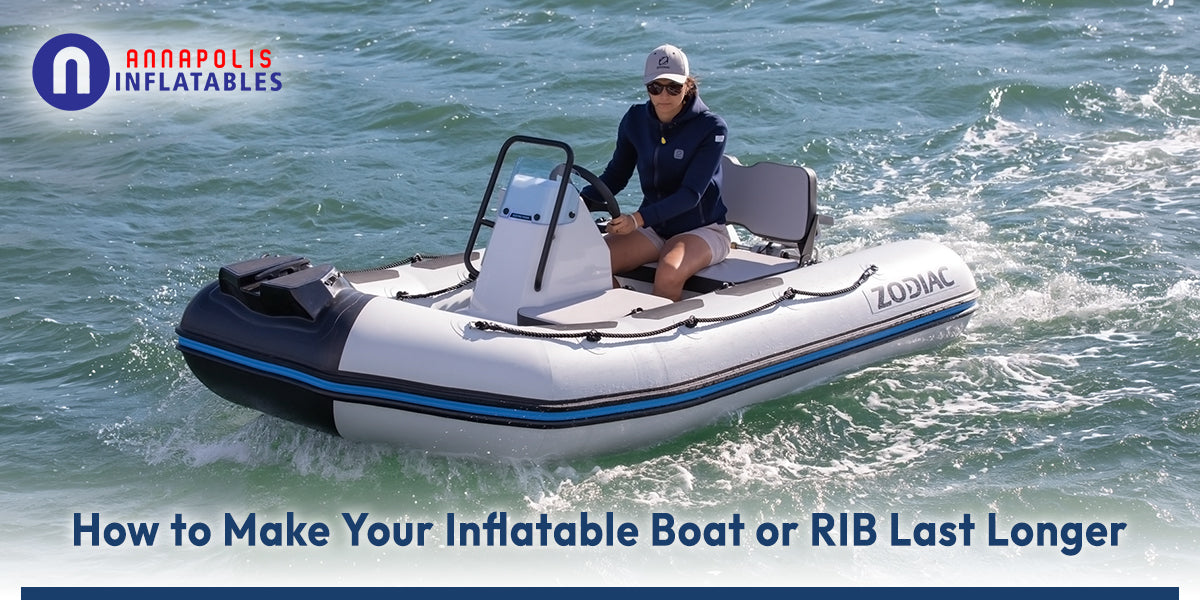
How to Make Your Inflatable Boat or RIB Last Longer
Table of Contents
- How long should an inflatable boat last?
- The Biggest Threat To Inflatable Boat Longevity: UV Exposure
- Tube Pressure: The Maintenance Factor Most Owners Underestimate
- Cleaning: What To Use And What To Avoid
- Storage: The Single Biggest Determinant Of Long-Term Lifespan
- Seam And Tube Inspection: Catching Problems Before They Become Failures
- Transom care: the structural connection most owners overlook
- Professional Inspection And Re-Tubing: Knowing When To Invest
- FAQs
A well-maintained inflatable boat from a reputable manufacturer can deliver 15 to 20 years of reliable service. The same boat, neglected or stored incorrectly, may show serious tube degradation within five years. The boat does not determine its own lifespan; the owner does.
This guide covers every factor that affects how long an inflatable boat or RIB lasts, in order of impact. Some of these factors require five minutes of attention after every outing. Others require one decision made correctly at the point of purchase. All of them compound over time; the owners who get the most years from their boats are the ones who get the small things right consistently.
How long should an inflatable boat last?
Lifespan varies significantly by tube material, maintenance quality, operating environment, and storage conditions. The table below gives realistic benchmarks for the main boat types.
| Boat type | Typical lifespan | Primary limiting factor |
|---|---|---|
| PVC inflatable, well maintained | 7 to 15 years | UV degradation of PVC tube material |
| PVC inflatable, poorly maintained | 3 to 7 years | Accelerated UV damage, seam failure from under-inflation |
| Hypalon/CSM inflatable, well maintained | 15 to 20+ years | Seam adhesive and fabric fatigue over extended use |
| Hypalon/CSM inflatable, poorly maintained | 8 to 12 years | Storage damage, seam stress from incorrect folding |
| Rigid hull RIB, fibreglass hull | 20+ years (hull) | Tubes require replacement before hull, hull outlasts tubes |
| Rigid hull RIB, aluminum hull | 20+ years (hull) | Same as fibreglass, hull longevity far exceeds tube lifespan |
The most important variable in the table is maintenance quality; the gap between a well-maintained and poorly maintained boat of the same material is 5 to 10 years of usable life.
For a full breakdown of how tube material affects long-term durability, see our Hypalon vs PVC guide.
The Biggest Threat To Inflatable Boat Longevity: UV Exposure

Ultraviolet radiation is the primary cause of premature tube degradation on PVC inflatable boats. It is also the most preventable cause, and the one most owners underestimate because the damage happens gradually and invisibly until it is too late to reverse.
How UV affects PVC versus Hypalon
PVC is significantly more vulnerable to UV degradation than Hypalon or CSM. UV radiation breaks down the plasticizers in PVC that keep the material flexible; over time, the tubes become progressively stiffer, crack under flexing, and eventually delaminate at the seams. A PVC boat stored uncovered in direct Maryland sun will age measurably faster than the same boat stored under cover. The difference over five years is visible.
Hypalon and CSM tubes are inherently more UV resistant; the base material does not contain the plasticizers that UV destroys in PVC. Hypalon boats stored in direct sun still age faster than boats covered by UV-resistant chaps, but the degradation mechanism is slower, and the timeframe is significantly longer.
Boat color and heat absorption
Dark-colored boats absorb significantly more solar heat than light-colored equivalents. A black inflatable in direct Chesapeake Bay summer sun can experience internal tube pressure increases of more than 1.5 PSI over the course of a day, and sustained high heat accelerates material degradation beyond just the pressure variation. Light gray or white boats run cooler in direct sun and experience less heat-driven aging. If you regularly store your boat uncovered in direct sun, a light-colored boat is a meaningful long-term investment.
Practical UV protection
- Cover the boat when not in use; a purpose-built UV-resistant inflatable boat cover, CHAPS, is the single most effective UV protection available
- Store indoors or in shade when possible; a garage, shed, or covered dock eliminates UV exposure entirely during storage
- Apply a UV protectant spray formulated for marine PVC or Hypalon annually; these slow surface oxidation and maintain material flexibility
- Avoid storing partially inflated in direct sun for extended periods; the combination of heat, pressure, and UV accelerates seam stress
For Highfield Classic tender owners specifically, purpose-built chaps provide a fitted layer of UV and abrasion protection for the tubes; see our guide on how chaps extend the life of your Highfield Classic tender
Tube Pressure: The Maintenance Factor Most Owners Underestimate

Correct tube pressure does more than affect performance; it directly determines how long the tubes last. Both chronic under-inflation and over-inflation shorten tube life, through different mechanisms.
The damage from under-inflation
Chronically under-inflated tubes flex excessively under load. Every time the boat planes, turns, or takes a wave, the under-inflated tube deforms more than it should. That repeated flexing concentrates stress at seam lines, the bond between the tube fabric and the seam tape that holds the boat together. Over hundreds of outings, this stress causes seam adhesive to fatigue and lift. By the time the seam is visibly separating, the cumulative damage from under-inflation has already been done across the full length of every seam on the boat.
The risk from over-inflation
Over-inflation in hot conditions is less common but more acute. A boat inflated to the correct pressure in cool morning conditions and then left in direct Maryland summer sun can experience pressure increases that push past the manufacturer's recommended maximum. The responsibility falls entirely on the owner to check and release pressure when conditions change.
For a hands-free approach to tube pressure management, see our guide to automatic tube pressure maintenance.
Cleaning: What To Use And What To Avoid

The wrong cleaning product on an inflatable boat tube is one of the most common causes of accelerated material degradation. Solvents that are safe on fiberglass hulls or aluminum can dissolve the bonding agents in PVC tubes or strip the protective surface layer from Hypalon.
After every outing: the non-negotiable baseline
Rinse the entire boat with fresh water after every saltwater or brackish water outing. Salt crystals left on tube surfaces and seams draw moisture, accelerate corrosion on metal fittings, and work into seam lines where they can disrupt the adhesive bond over time. A five-minute freshwater rinse after every outing is the single most cost-effective maintenance action available for any inflatable boat.
PVC tube cleaning
Use mild soap and fresh water for routine cleaning of PVC tubes. Avoid petroleum-based solvents, acetone, MEK, and harsh chemical degreasers; these dissolve or soften the PVC surface and accelerate UV degradation. For stubborn stains, a purpose-built PVC cleaner from a Fawcett boat supplies is the correct tool. Apply UV protectant after cleaning to restore surface protection.
Hypalon and CSM tube cleaning
Hypalon and CSM tubes are more chemically resistant than PVC but still require appropriate cleaning products. Mild soap and water covers routine cleaning. For oxidized or heavily soiled Hypalon, a dedicated Hypalon cleaner restores the surface without damaging the material. Avoid petroleum solvents and acetone on Hypalon as well; chemical resistance does not mean chemical immunity.
Hull cleaning: fiberglass and aluminum
Fiberglass hulls on RIBs can be cleaned with standard marine fiberglass cleaners like Starbright Instant Hull Cleaner and polished annually to maintain gelcoat integrity. Aluminum hulls require aluminum-safe cleaners; avoid acidic cleaners that etch the surface. For inflatable floors, follow the same guidance as for the tube material.
For outboard motor flushing and exterior care after saltwater use, see our complete flushing guide.
Storage: The Single Biggest Determinant Of Long-Term Lifespan

An inflatable stored correctly in a garage will outlast the same model stored folded in a damp locker by a decade.
Inflated vs deflated storage
For short-term storage between regular outings, storing the boat inflated is preferable to deflating and folding. An inflated boat maintains its shape, keeps seams under their intended tension, and avoids the crease stress that repeated folding creates at the same fold lines. Deflate only when storage space requires it or when storing for an extended period such as winter lay-up.
How to fold a PVC inflatable correctly
When deflating for storage, fold along natural lines rather than forcing the material into a tight bundle. Roll rather than fold where possible; rolling distributes stress across a wider area of material rather than concentrating it at a crease line. Avoid folding at the same point repeatedly. Fold lines that are creased repeatedly become stress points where the PVC eventually cracks or delaminates. Store in a dry bag or purpose-built transport bag rather than compressed under heavy objects.
Indoor vs outdoor storage
Indoor storage in a garage or shed eliminates UV exposure, significantly reduces temperature cycling, and protects the boat from pest damage. If indoor storage is not available, a UV-resistant cover and a sheltered outdoor location are the next best option. Avoid storing a deflated inflatable directly on concrete; moisture wicks through the material from below and accelerates mold growth on the fabric interior.
Rodent and pest damage
A less-discussed but genuinely common cause of inflatable boat damage is rodent activity during winter storage. Mice and rats will chew through PVC and Hypalon tube material to access the interior of a stored boat. Store in a sealed area where possible, or place rodent deterrents around the storage location.
For winter storage preparation guidance, see our winter boat storage checklist.
Seam And Tube Inspection: Catching Problems Before They Become Failures
Most inflatable boat failures that require professional repair or tube replacement could have been caught earlier with a simple annual inspection.
What to look for
- Seam lines: run a finger along every seam and look for lifting, bubbling, or separation of the seam tape from the tube fabric. Early-stage seam lifting is repairable with the correct adhesive; full seam separation is a professional repair.
- Tube stiffness: inflate to operating pressure and press the tube surface firmly. PVC that has lost plasticizer from UV degradation feels stiff and does not spring back naturally. A tube that cracks when flexed is at end of life.
- Glue line separation: particularly at D-rings, handles, and any bonded fitting. These high-stress attachment points are the first to show adhesive fatigue.
- Valve seat condition: inspect each valve for corrosion, cracking of the valve seat, and correct seating of the valve core. A valve that does not hold pressure under finger pressure requires replacement.
- Floor condition: check inflatable floors for delamination at the edges; check aluminum floors for corrosion at the slat joints
The 24-hour pressure test
Once a year, ideally at the start of the season, inflate the boat to operating pressure and leave it for 24 hours in stable temperature conditions. A significant drop indicates either a valve leak, a seam leak, or a tube puncture that requires attention before the season begins. Locate the leak by applying soapy water to seams and valve areas and watching for bubbles.
Repair kit basics
Every inflatable boat owner should carry a basic repair kit: tube repair patches in the correct material (PVC or Hypalon, do not use PVC patches on Hypalon or vice versa), two-part adhesive, and valve cores. A small puncture repaired immediately is a 10-minute job. The same puncture left until it enlarges through repeated inflation cycles is a professional repair.
Transom care: the structural connection most owners overlook
The transom bears the full thrust load of the motor at speed and the leverage of the motor weight at rest. It is one of the most mechanically stressed components on an inflatable boat and one of the least inspected; transom wear and fatigue are a common cause of boats being retired earlier than necessary.Professional Inspection And Re-Tubing: Knowing When To Invest
Even with excellent owner maintenance, inflatable boat tubes eventually reach the end of their serviceable life.
Signs the tubes need professional attention
- Tube stiffness that does not respond to UV protectant treatment; the plasticizer loss is irreversible beyond a certain point.
- Seam separation longer than a few inches; extended seam failure requires professional re-bonding.
- Multiple simultaneous leaks, a boat that requires inflation before every outing has reached the end of reliable DIY repair territory.
- Visible cracking of the tube surface indicates advanced UV degradation; the material cannot be restored.
Re-tubing versus replacement
Re-tubing replaces the inflatable tube set on a rigid hull RIB while retaining the existing hull. It is a cost-effective option when the hull, fiberglass or aluminum, is in good structural condition. A quality hull with well-maintained running gear can accept a new tube set and deliver another 10 to 15 years of service at a fraction of the cost of a new boat.
The decision point is hull condition: if the hull is sound, re-tube; if the hull has structural issues, replacement is the better investment.
For soft-floor inflatables with no rigid hull, re-tubing is less commonly cost-effective; the tube is the primary structure of the boat and replacement of the full boat is often the more practical outcome when tubes reach end of life.
Annapolis Inflatables provides professional inspection, repair, and service for inflatable boats and RIBs across the full range of brands we stock. For a service assessment or to discuss whether re-tubing or replacement is the right decision for your boat, contact our team at Annapolis Inflatables or call +1 410-267-8681.
FAQs
How long does a PVC inflatable boat last?
A well-maintained PVC inflatable boat typically lasts 7 to 15 years.
How long does a Hypalon inflatable boat last?
A well-maintained Hypalon or CSM inflatable boat typically lasts 15 to 20 years or more.
Can inflatable boat tubes be replaced without replacing the whole boat?
Yes, on rigid hull RIBs with fiberglass or aluminum hulls, re-tubing is a cost-effective alternative to full boat replacement when the hull is in good structural condition. For soft-floor inflatables without a rigid hull, re-tubing is less commonly cost-effective and full replacement is typically the more practical outcome.
What is the single most important thing I can do to make my inflatable last longer?
Store it out of direct sunlight. UV exposure is the primary cause of premature tube degradation on PVC boats and a significant factor on Hypalon boats. Everything else- correct pressure, regular cleaning, proper folding- compounds on top of this foundation.


 Powered by goodChatBot